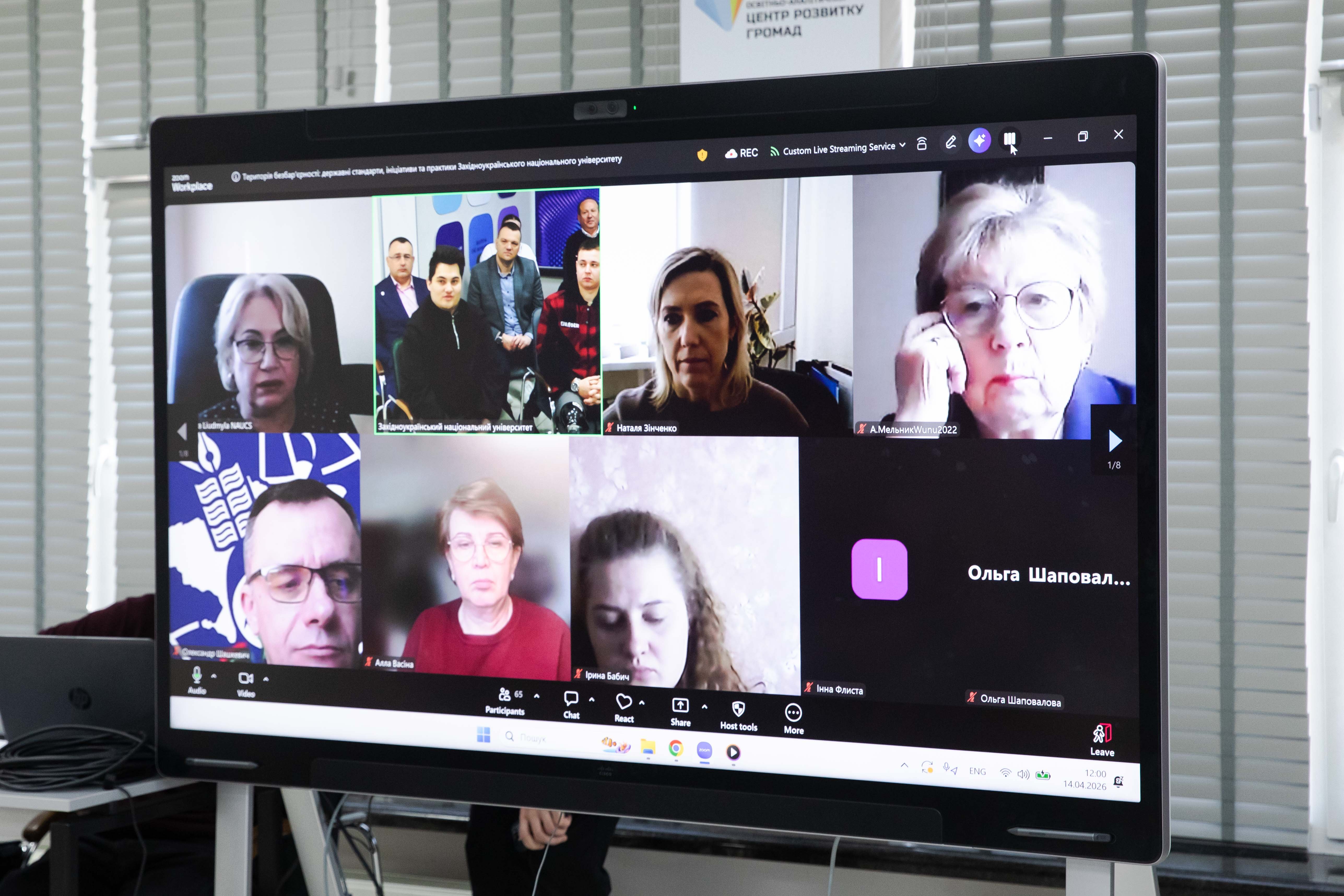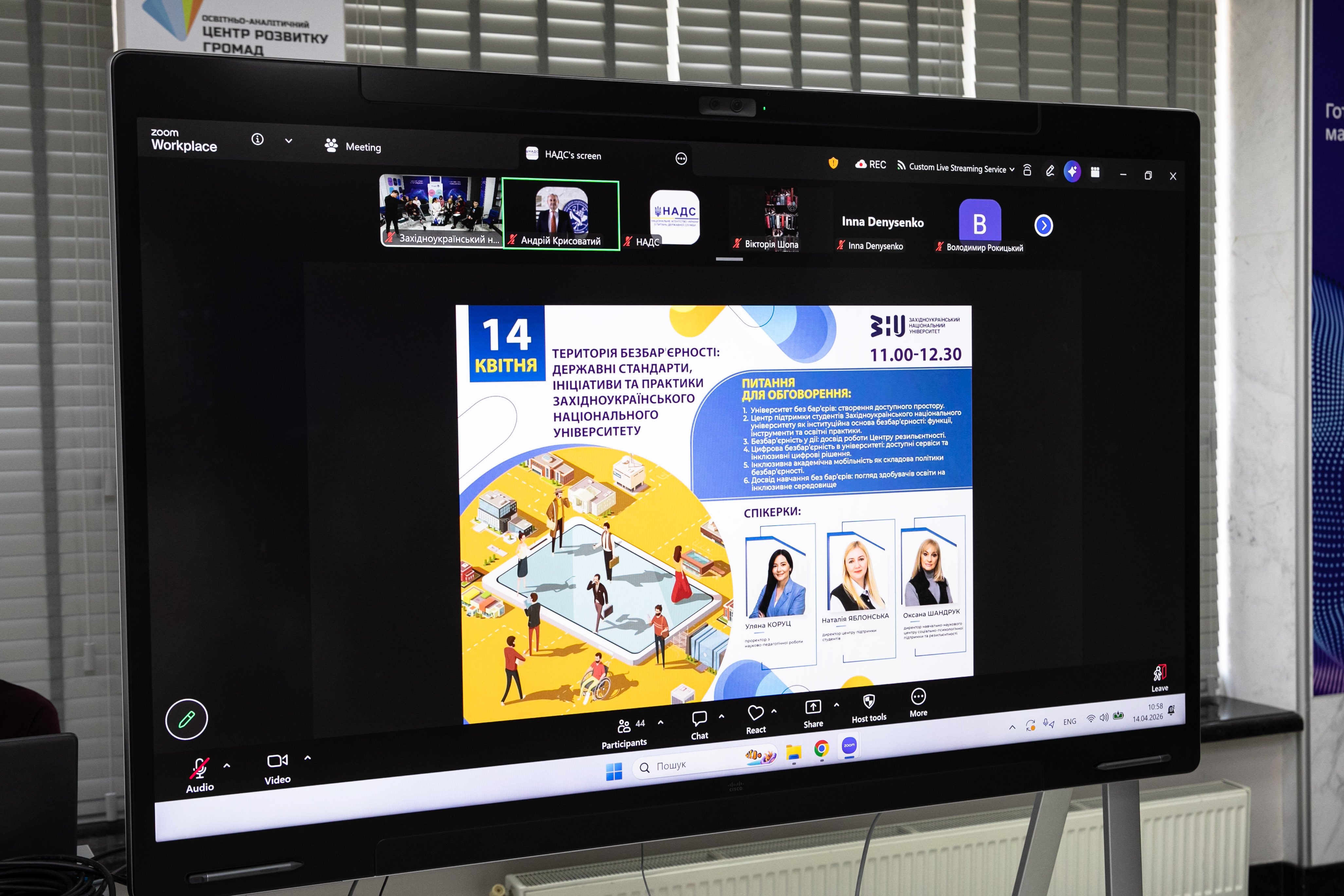
West Ukrainian National University joined the second stage of the ‘Public Administration Without Barriers’ online educational marathon
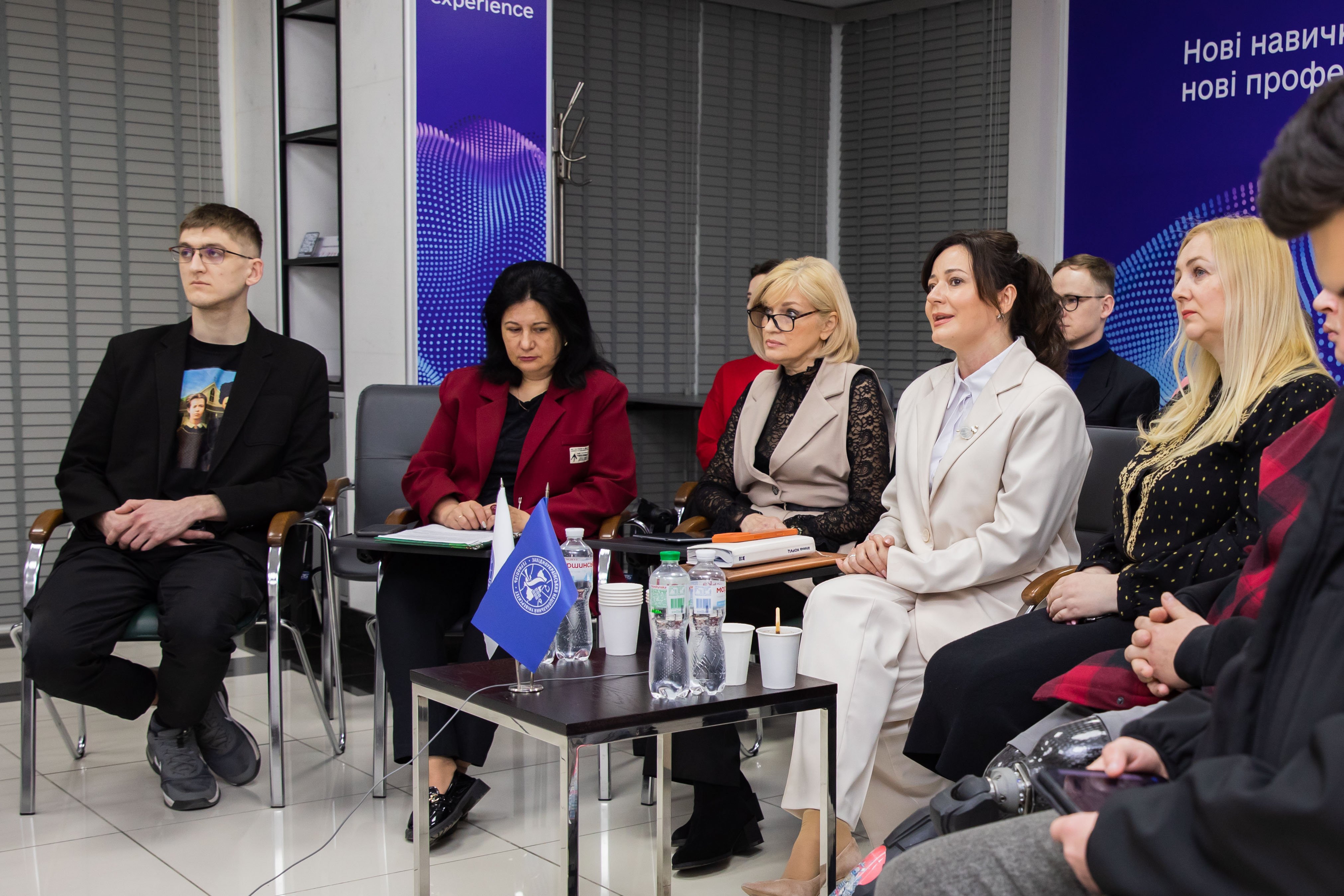
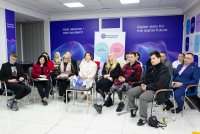
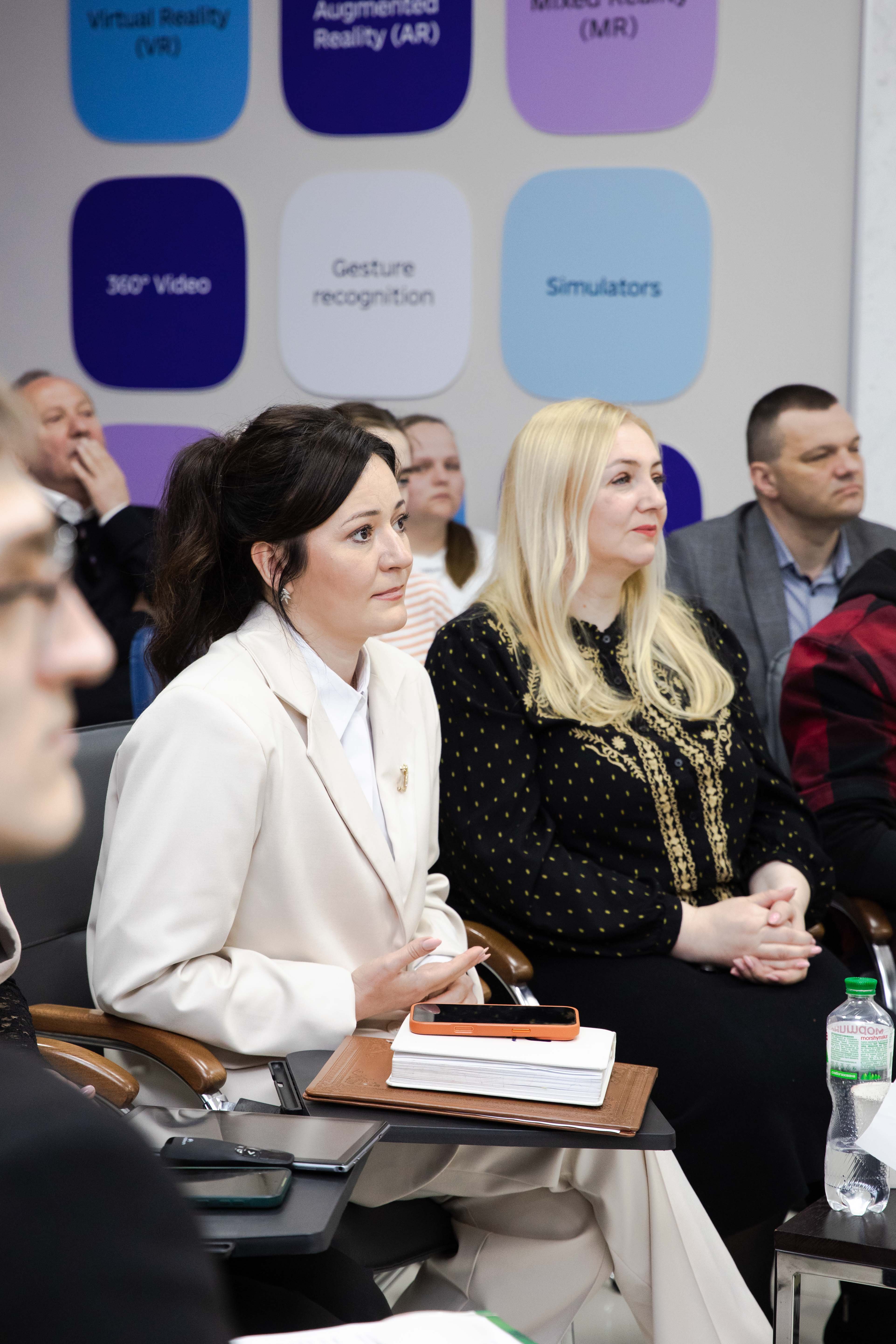
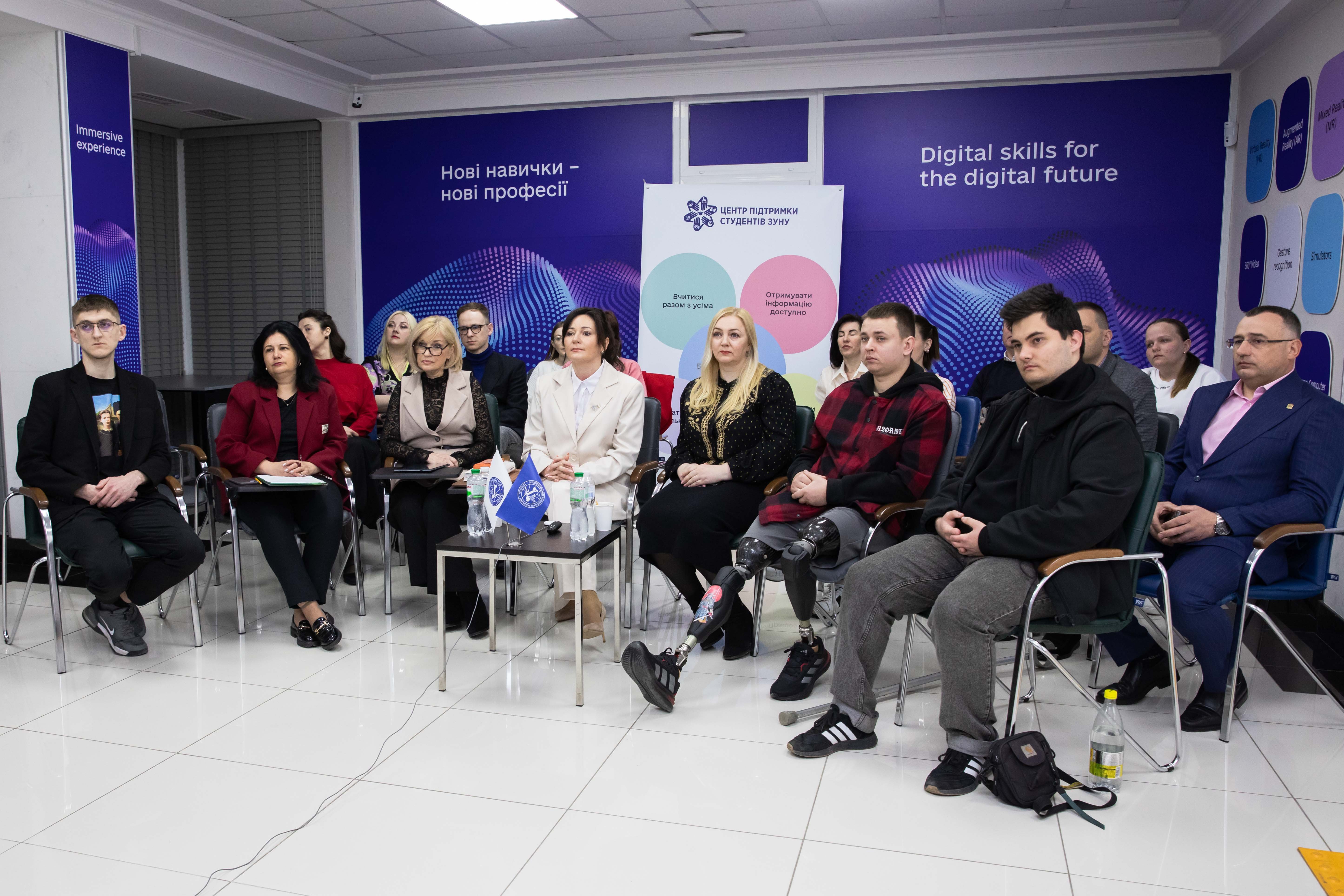 The first session of the second stage of the ‘Public Administration Without Barriers’ educational marathon brought together students, lecturers and experts to discuss the creation of an accessible and people-centred environment.
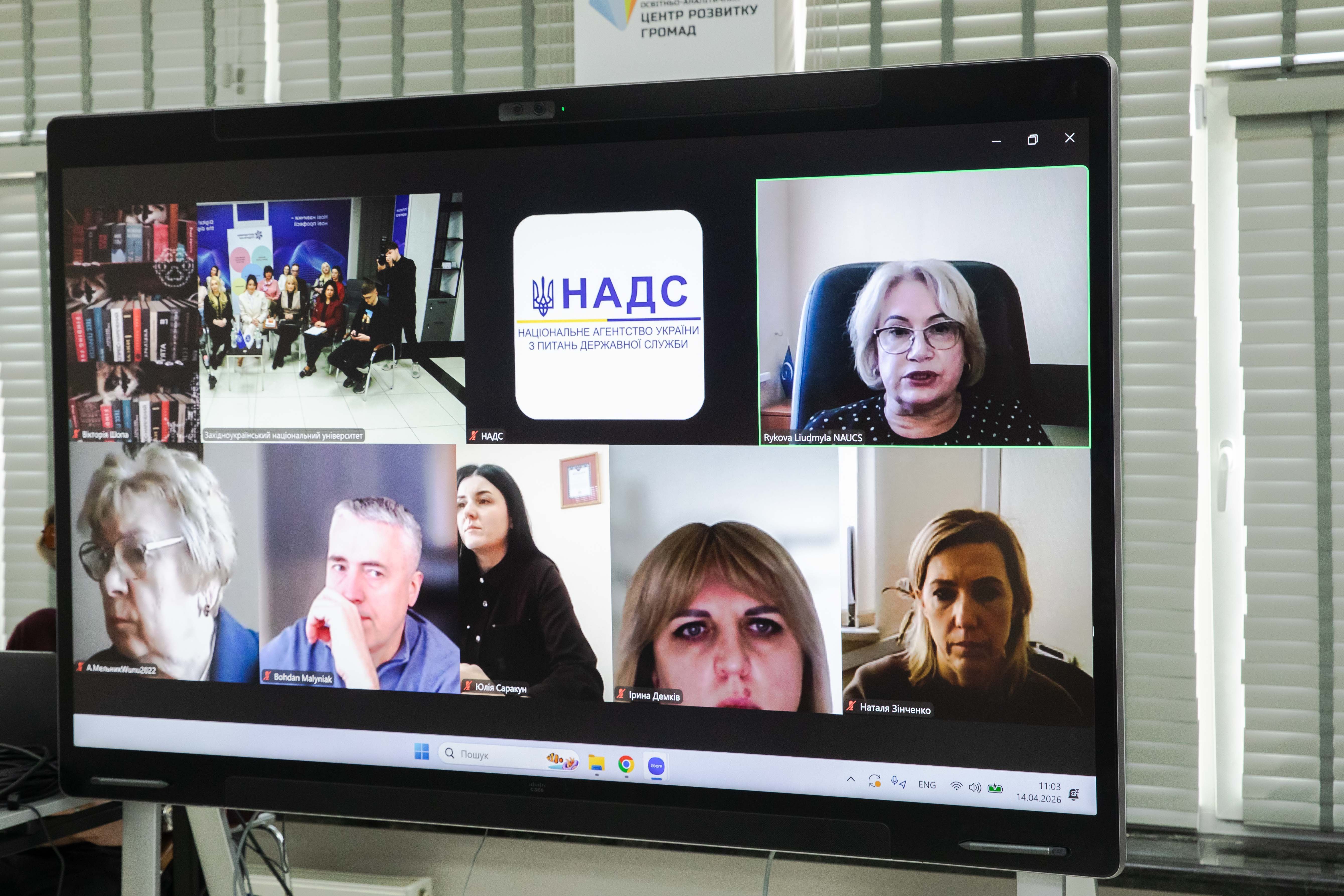
The session was organised by the National Agency of Ukraine for Civil Service, the Higher School of Public Administration and West Ukrainian National University. The event served as a platform for bringing together public policy, educational approaches and practical solutions.
Session topic: ‘Accessibility: national standards, initiatives and practices at West Ukrainian National University’. Participants discussed how accessibility principles are being translated from regulatory documents into tangible changes.
The focus was on national accessibility standards and the mechanisms for their implementation. The discussion centred on creating an environment that takes into account the needs of every individual. The role of education in training specialists capable of implementing such approaches in public administration was also discussed.
The ‘Public Administration Without Barriers’ educational marathon is being run as part of the nationwide educational and awareness campaign ‘A State Without Barriers’. The initiative is shaping a new culture of public administration focused on equality, accessibility and respect for the individual. It is precisely these approaches that determine the quality of modern government decisions.
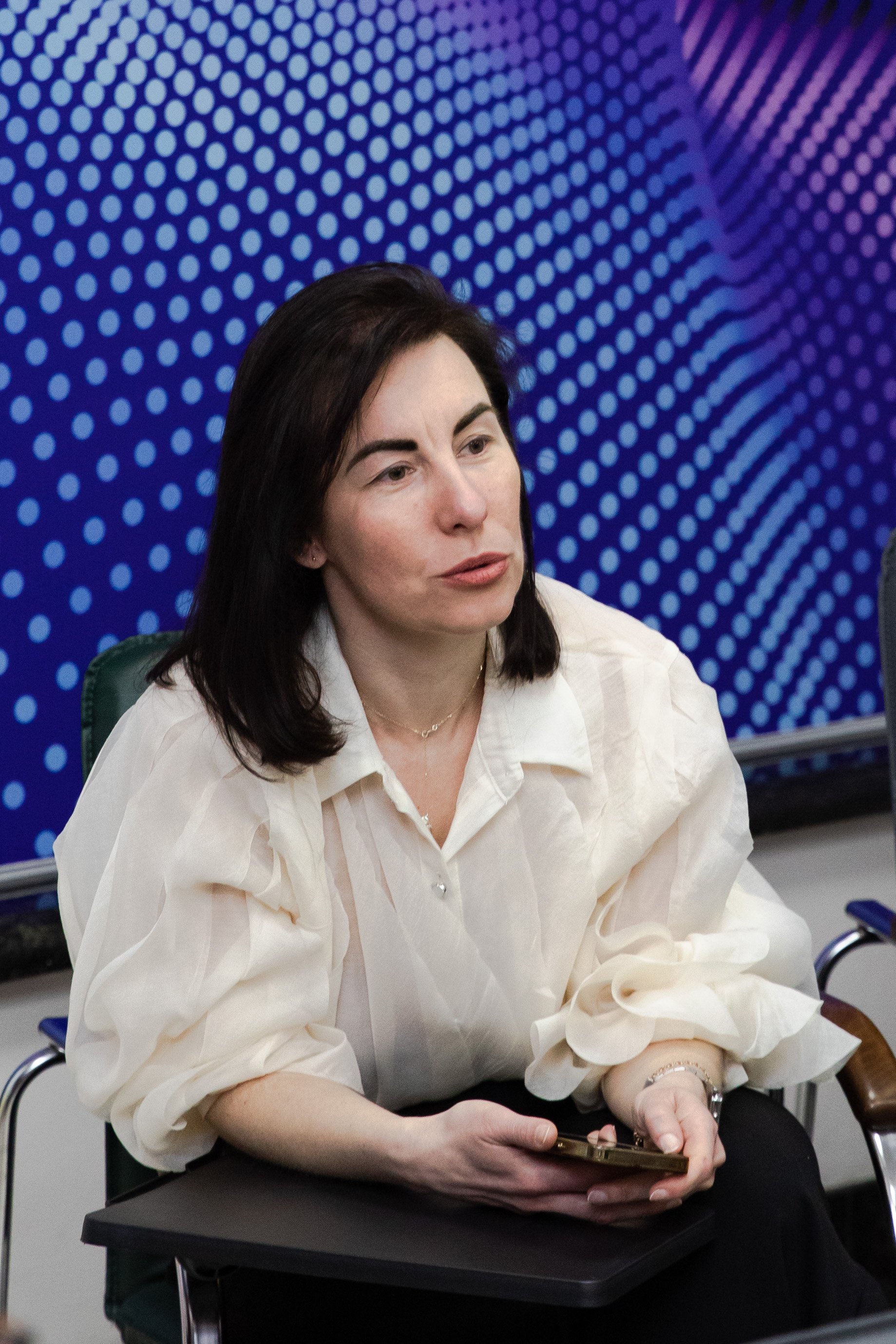
Liudmyla Rykova, Director of the General Department for the Professional Development of Civil Servants and Local Government Officials at the National Agency for Civil Service (NACS), addressed those present: “Our country is transforming its public administration system as part of its commitments on the path to EU membership. The state must create conditions in which every person can work effectively, learn, develop and feel respected – without physical, organisational, digital or information barriers.”
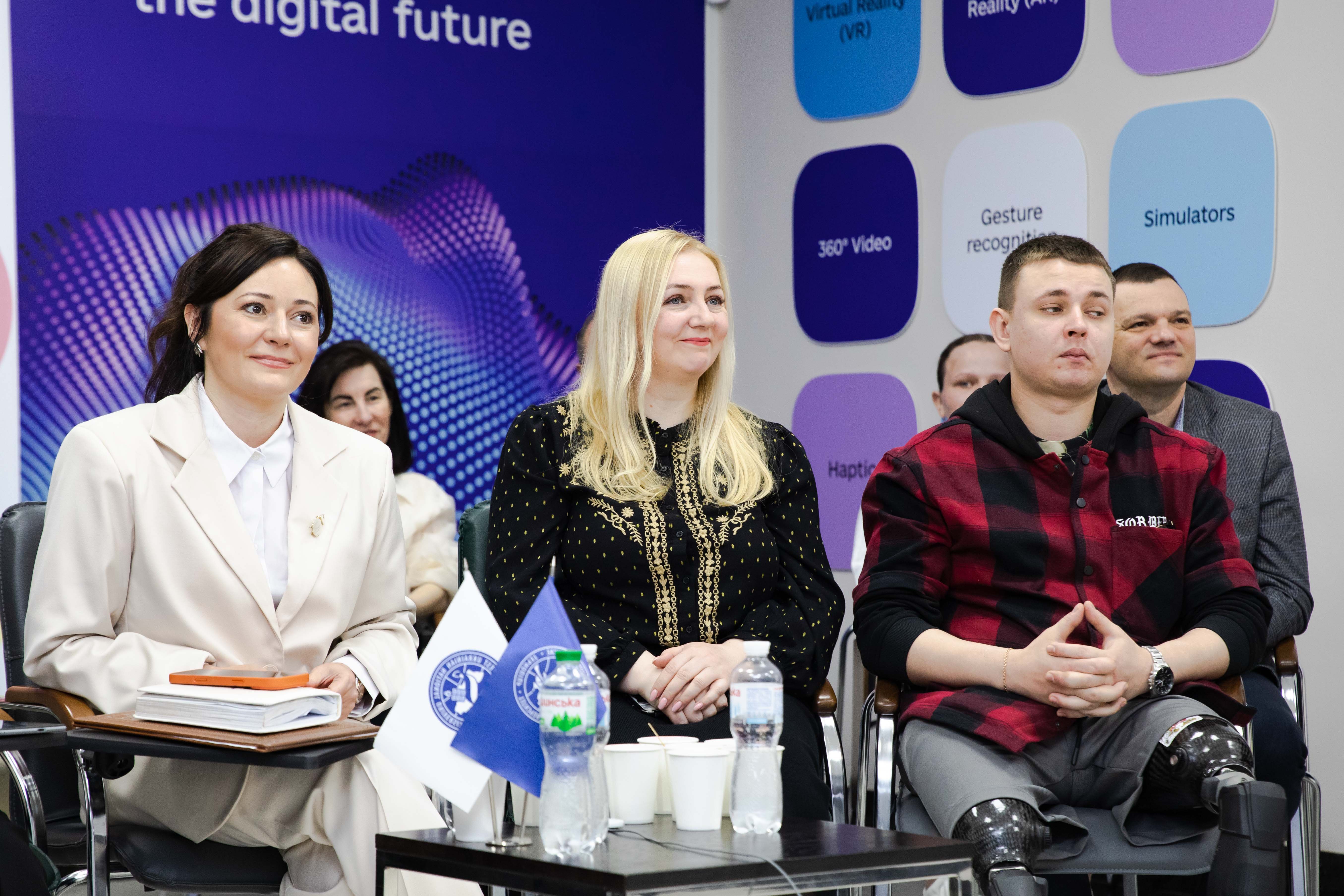
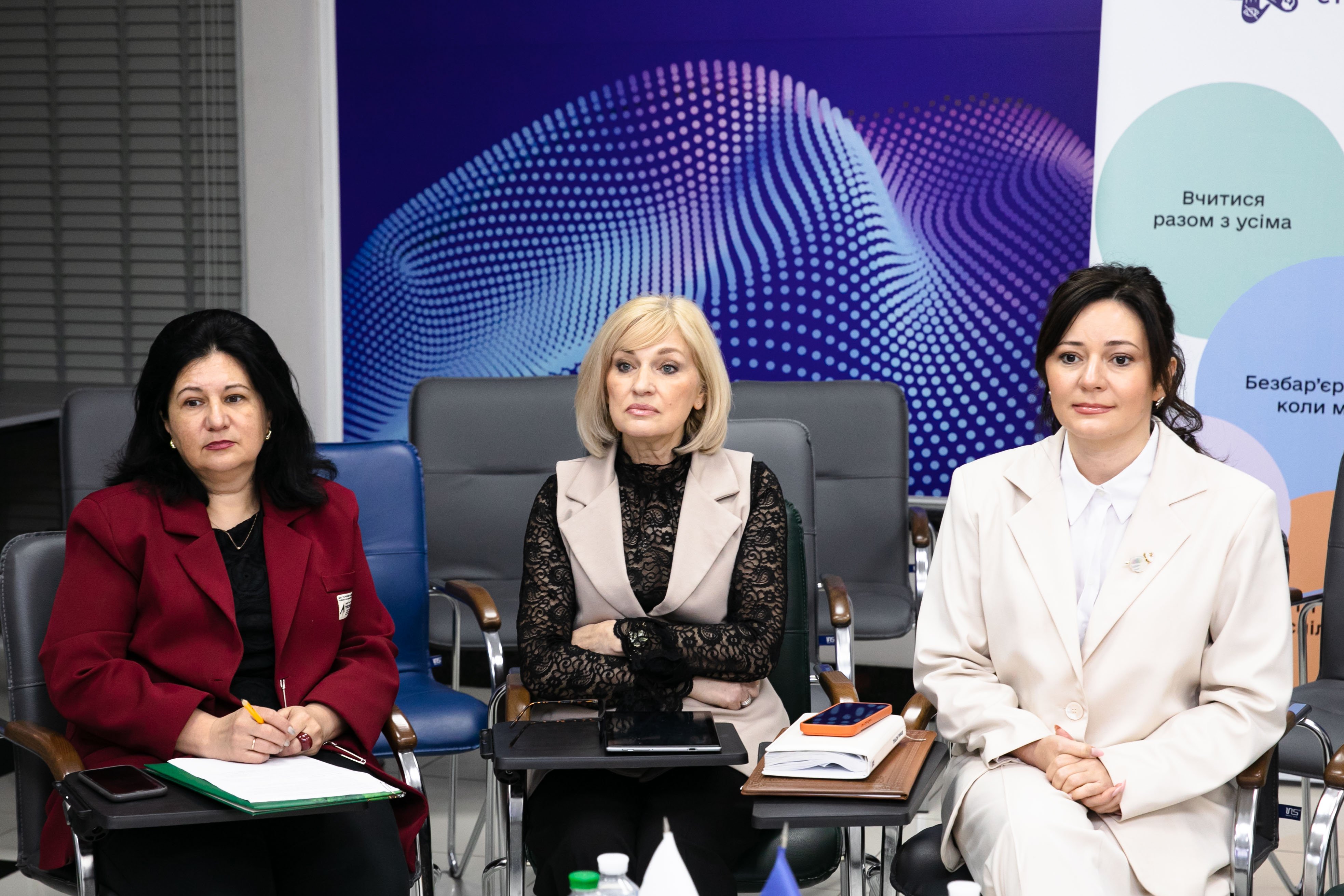
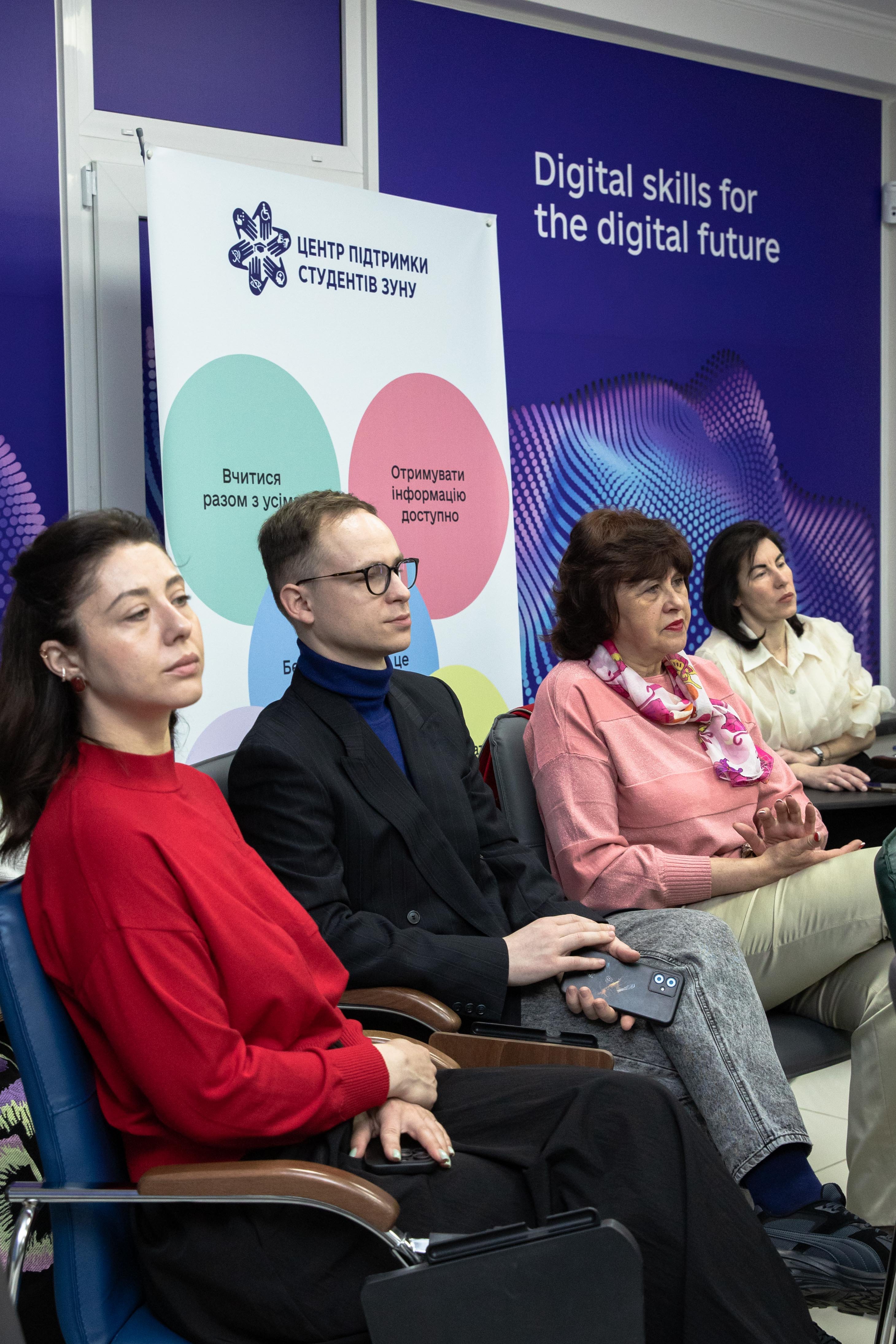
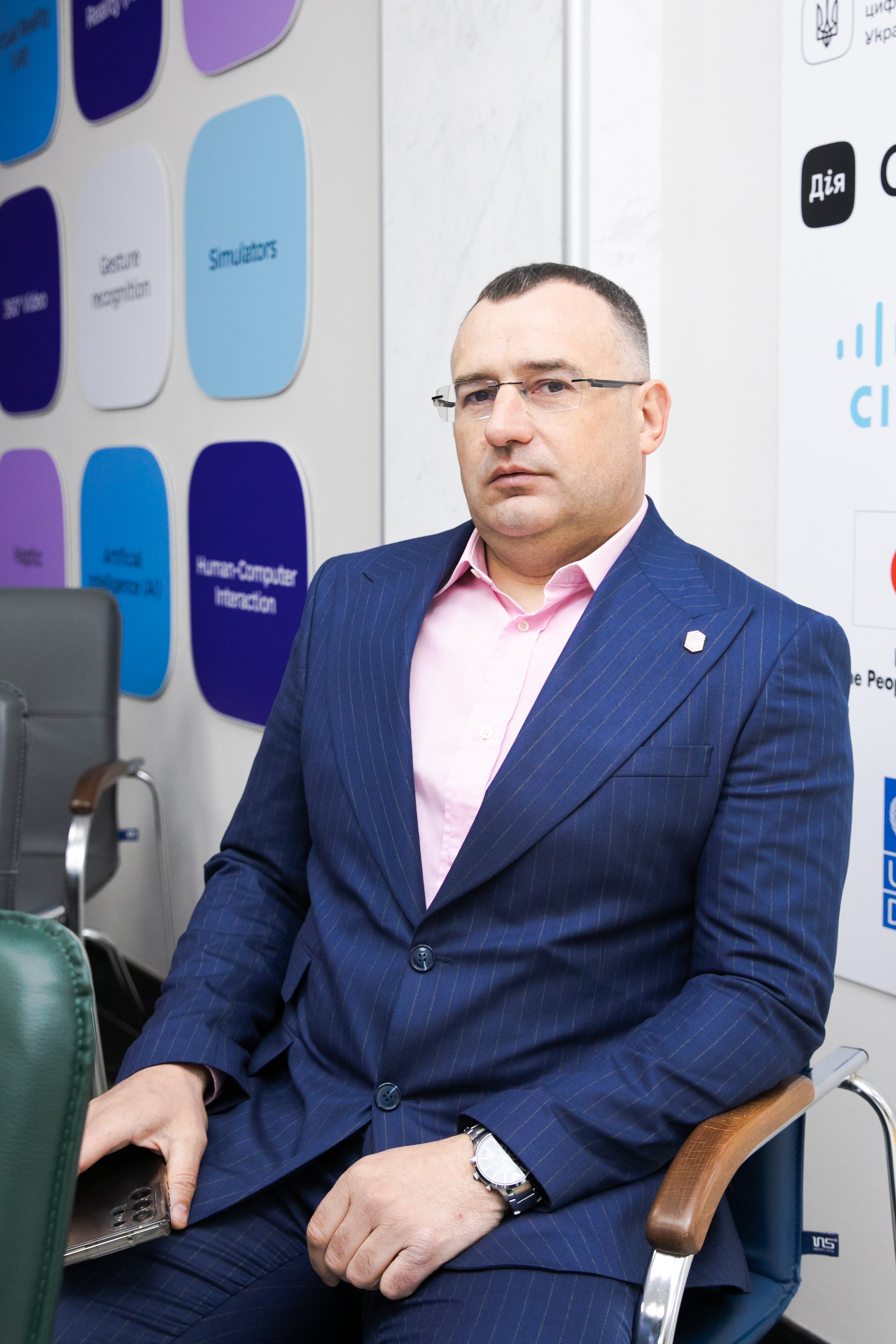
Representatives of West Ukrainian National University – Uliana Koruts, Vice-Rector for Academic Affairs and Research, Nataliia Yablonska, Director of the Student Support Centre; Oksana Shandruk, Director of the Education and Research Centre for Social and Psychological Support and Resilience; Tetiana Nadvynychna, Associate Professor of the Department of Psychology and Social Work; and Nazar Ivanitskyi, Head of the Digital Transformation Office, shared best practices for creating an inclusive educational environment, accessibility services and the implementation of universal design principles.
In her opening remarks, Vice-Rector Koruts welcomed the webinar participants and noted: “The issue of accessibility has always been important to the university. Today, it is not merely a standard, but our moral duty. We are committed to doing our utmost to ensure that every Ukrainian, regardless of any obstacles, has access to quality education. That is why we are actively developing academic mobility programmes for students with special educational needs, transforming our digital space step by step, ensuring architectural accessibility, and providing psychological support to all participants in the educational process.”
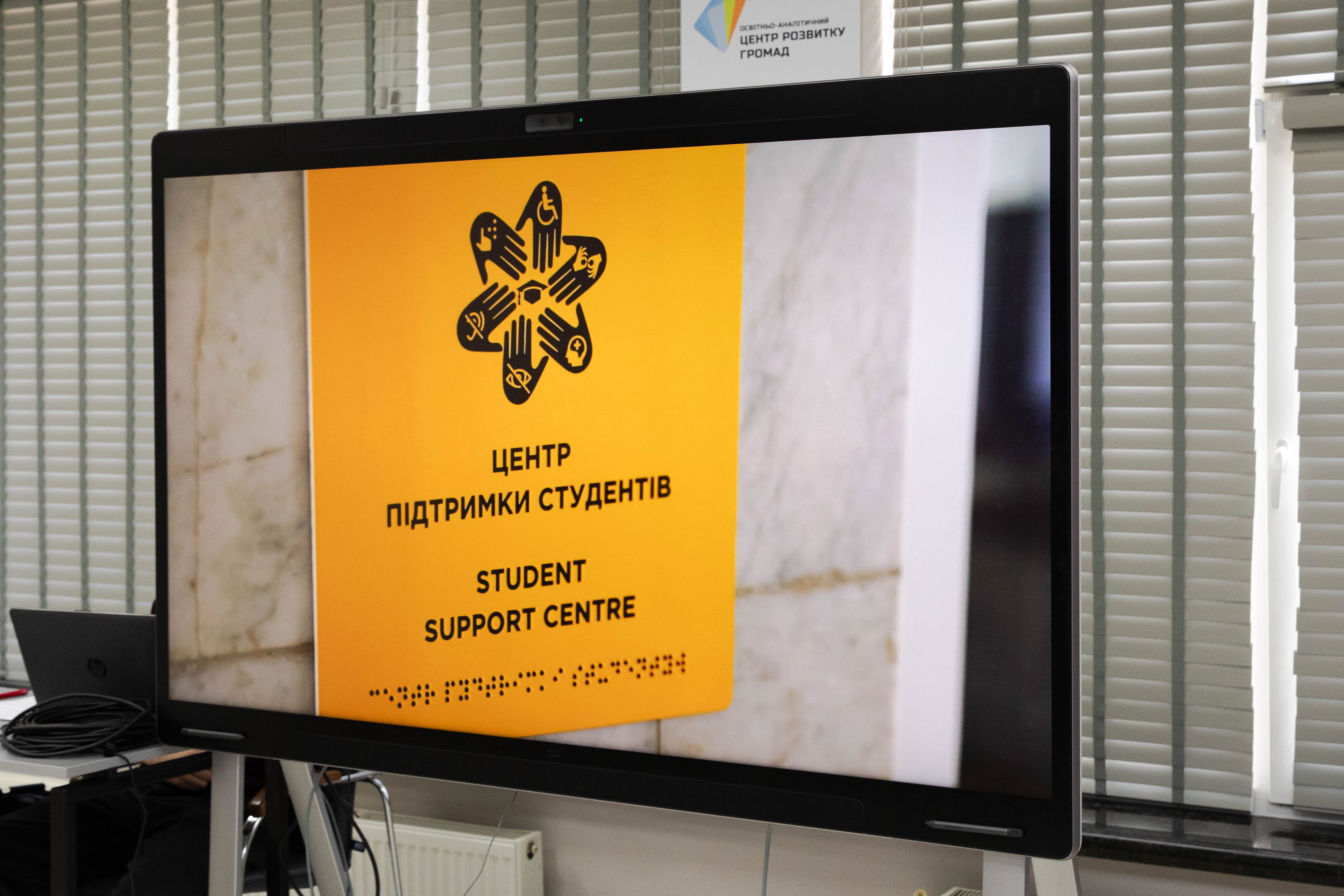
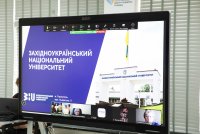
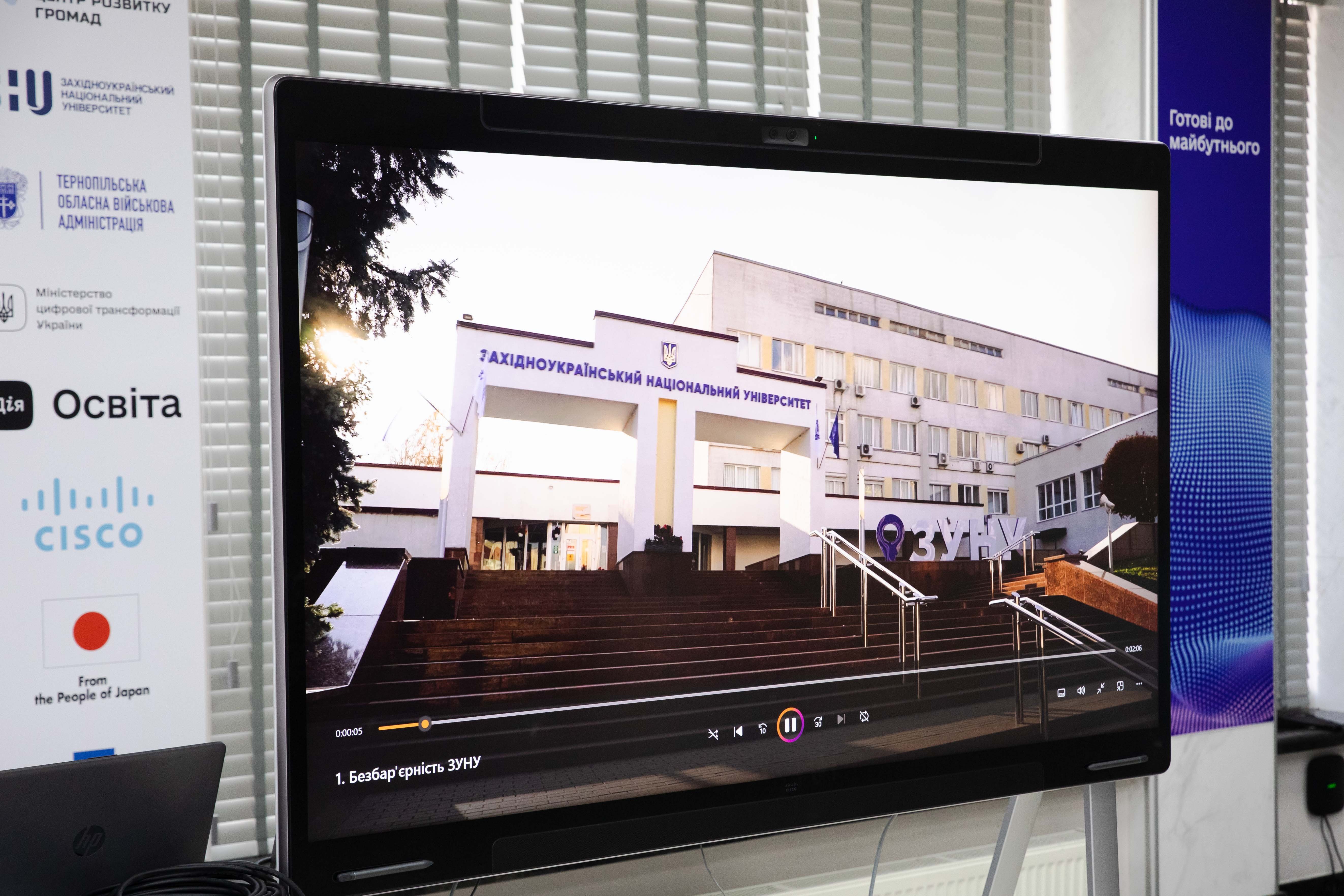
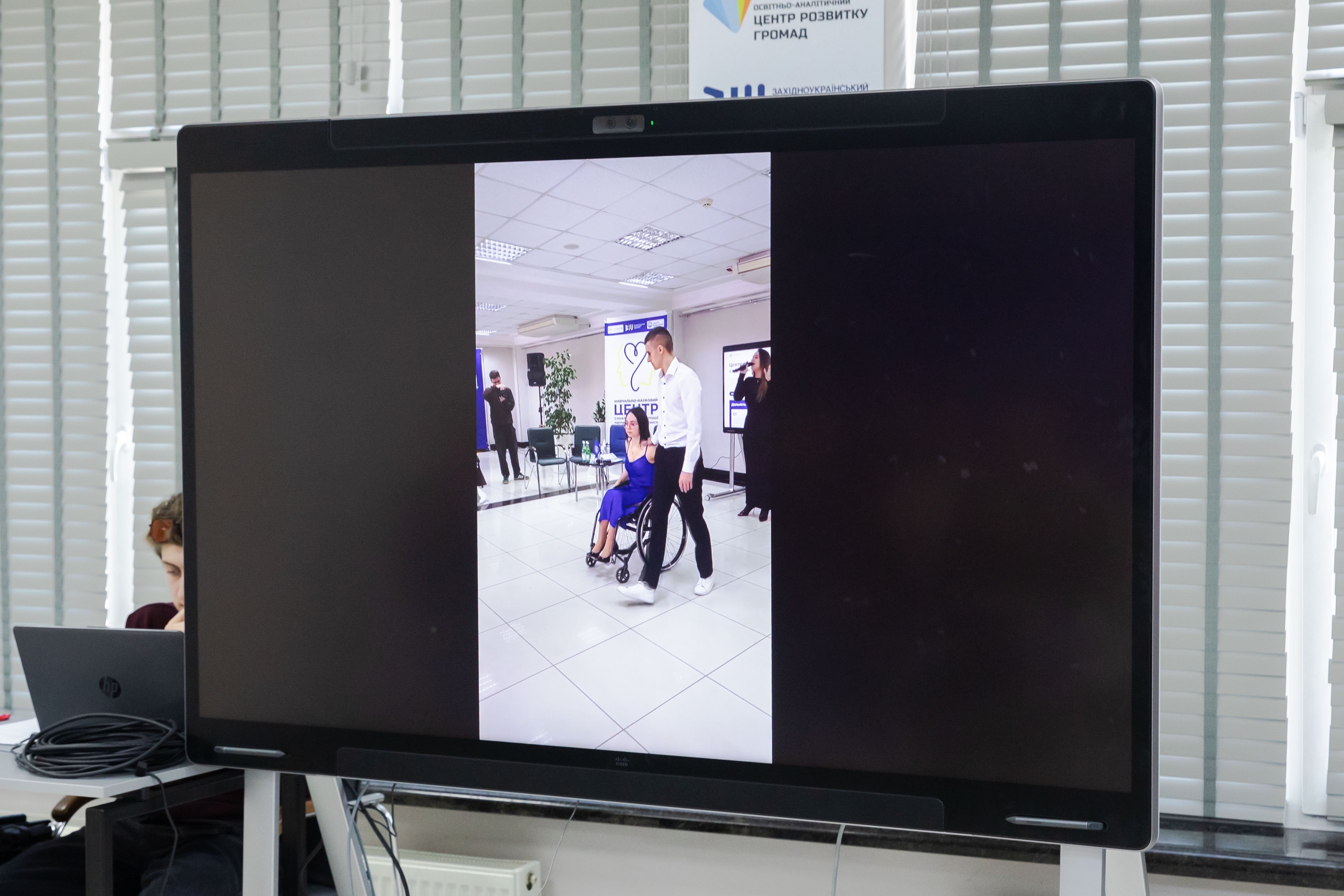
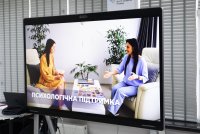
The Vice-Rector presented the marathon participants with a short video about accessibility at WUNU.
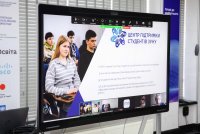
Nataliia Yablonska, Director of the Student Support Centre, gave a detailed account of the centre’s work: providing guidance during the admissions process, collaborating with various university units, creating adapted conditions for sitting exams, and taking an individualised approach to the learning process. She paid particular attention to psychological training sessions, which help to foster a tolerant environment, develop effective communication skills and build a community based on mutual support and respect.
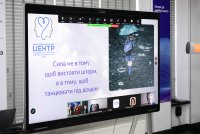
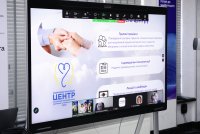
Oksana Shandruk, Director of the Education and Research Centre for Social and Psychological Support and Resilience at WUNU, outlined the centre’s areas of activity to those present. She spoke about individual counselling, mental health education, first psychological aid training, courses on coping with loss and grief, as well as special programmes for academic staff, teachers, doctors, social workers and police officers. In particular, she emphasised the importance of supporting the families of fallen heroes, and the use of art therapy, group counselling, and hippotherapy and canisterapy.
Associate Professor Tetiana Nadvynychna spoke about the fruitful collaboration with the Education and Research Institute of Public Administration at WUNU. As part of this partnership, teams from both units implement professional development programmes for civil servants and local government officials. The training covers a wide range of topics: from safeguarding the rights of people with disabilities and organising inclusive education to gender equality and psychological support during martial law. Tetiana Nadvynychna paid particular attention to the training of social workers in the Ternopil region, specifically those who provide support to veterans.
Nazar Ivanitskyi, Head of the Digital Transformation Office at WUNU, highlighted the importance of digital accessibility, discussing the implementation of inclusive standards, including the creation of high-contrast designs for the university’s websites, and ensuring the accessibility of the distance learning system, the digital library and personal online accounts.
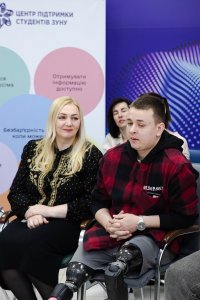
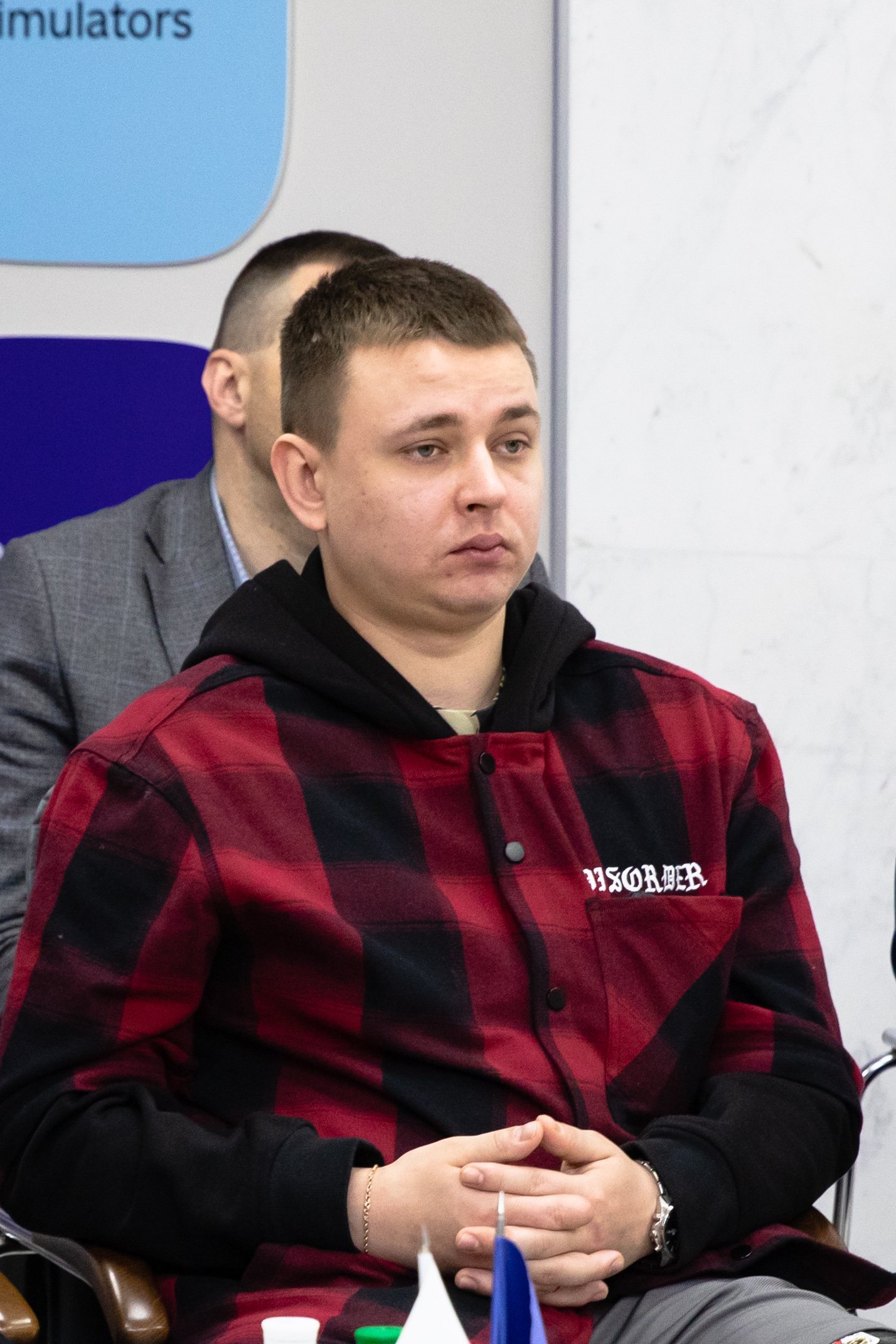
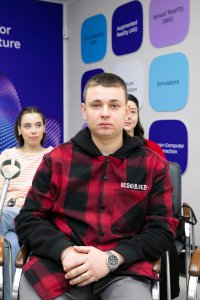
The students themselves also actively joined in the conversation. Viktor Rudyi, a first-year student and war veteran, spoke candidly about his own experience of applying to and studying at the university. According to Viktor, he felt supported from his very first days at university. The lecturers are always willing to help, adapt the format of their classes and treat everything with understanding. For him, WUNU is a place where one can not only study, but also develop fully and move forward.
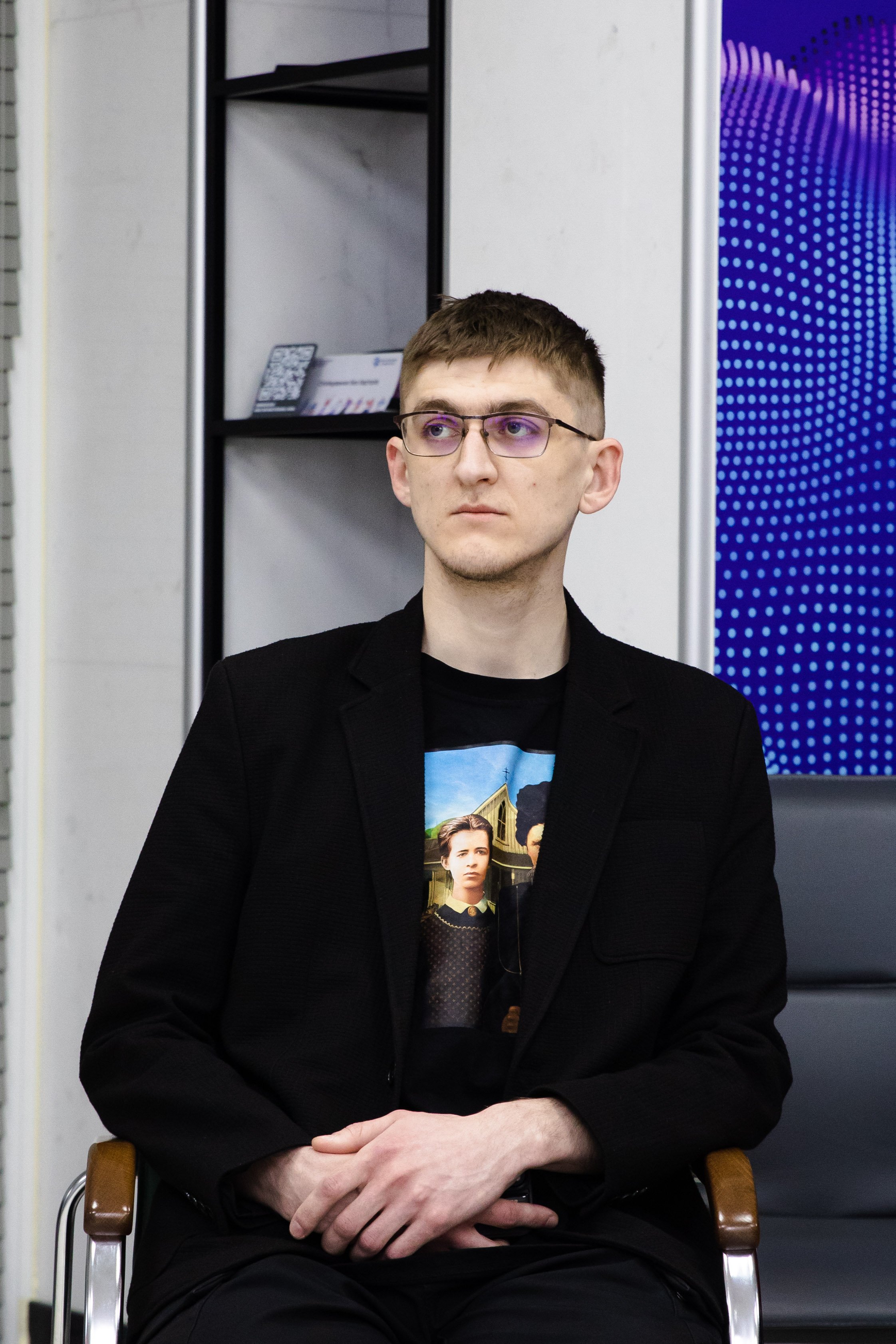
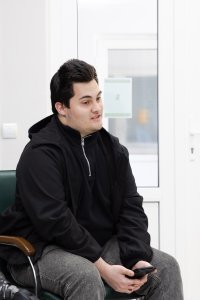
Oleksandr Kharkhut spoke about his experience of participating in the Erasmus+ programme in the Netherlands, highlighting how inclusive approaches help students with diverse needs to integrate into an international educational environment.
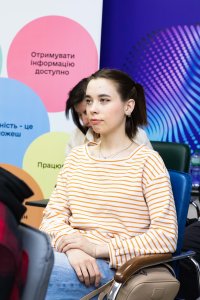
Solomiia Pidhorodetska, a student in the PS-13 group, used her own experience to assess the accessibility of West Ukrainian National University’s facilities for wheelchair users. Solomiia commended the institution’s efforts in creating a barrier-free environment, whilst emphasising the importance of further expanding such inclusive infrastructure across all university buildings. In addition to physical accessibility, the student highlighted the importance of emotional and creative comfort. She fondly recalled her participation in university-wide video competitions, noting that such initiatives are a wonderful tool for socialisation. It is through creativity, according to Solomiia, that every student can truly feel like an integral and valued part of the united university community.
Oksana Pysarchuk, Deputy Dean of the Faculty of Social Sciences and Humanities and Associate Professor at the Department of Educology and Pedagogy of WUNU, spoke about the collaboration with rehabilitation centres, which enables students to visit these facilities and allows children with special educational needs to see their future teachers and mentors in a real university setting.
Creating a barrier-free environment begins not only with government decisions or institutional changes, but first and foremost with the daily efforts of each and every one of us. Through openness, mutual support, and a willingness to listen to and understand others, a new culture of interaction is emerging—one that is more sensitive, fair and humane. By combining professional knowledge, experience and a sincere desire for change, we are shaping a country where there is no place for barriers — neither physical, nor social, nor mental. And it is precisely in this shared responsibility and commitment that lies the strength of a society capable of moving forward with confidence.