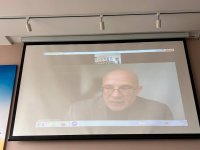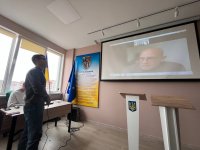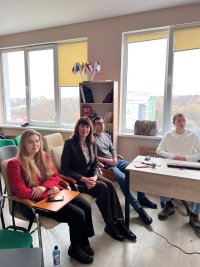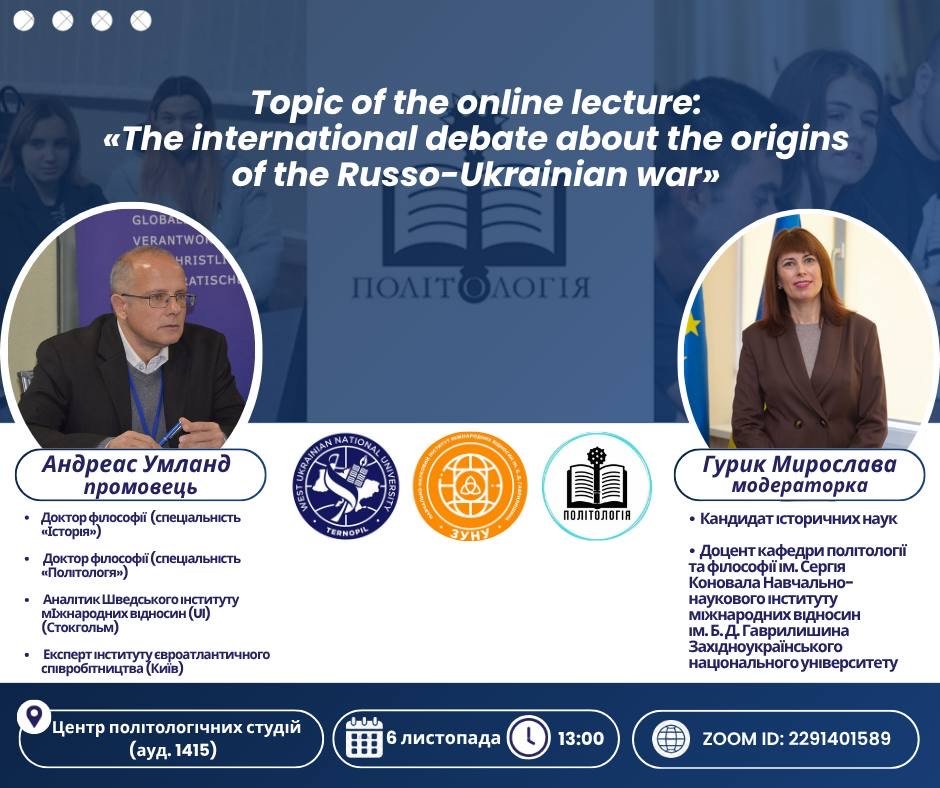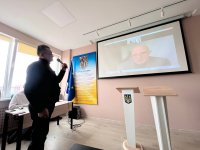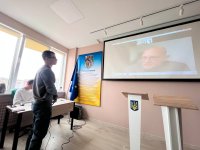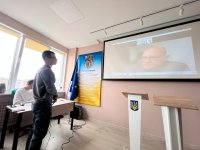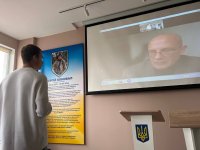
A meeting with Andreas Umland, an analyst at the Swedish Institute of International Affairs and an expert on Euro-Atlantic cooperation
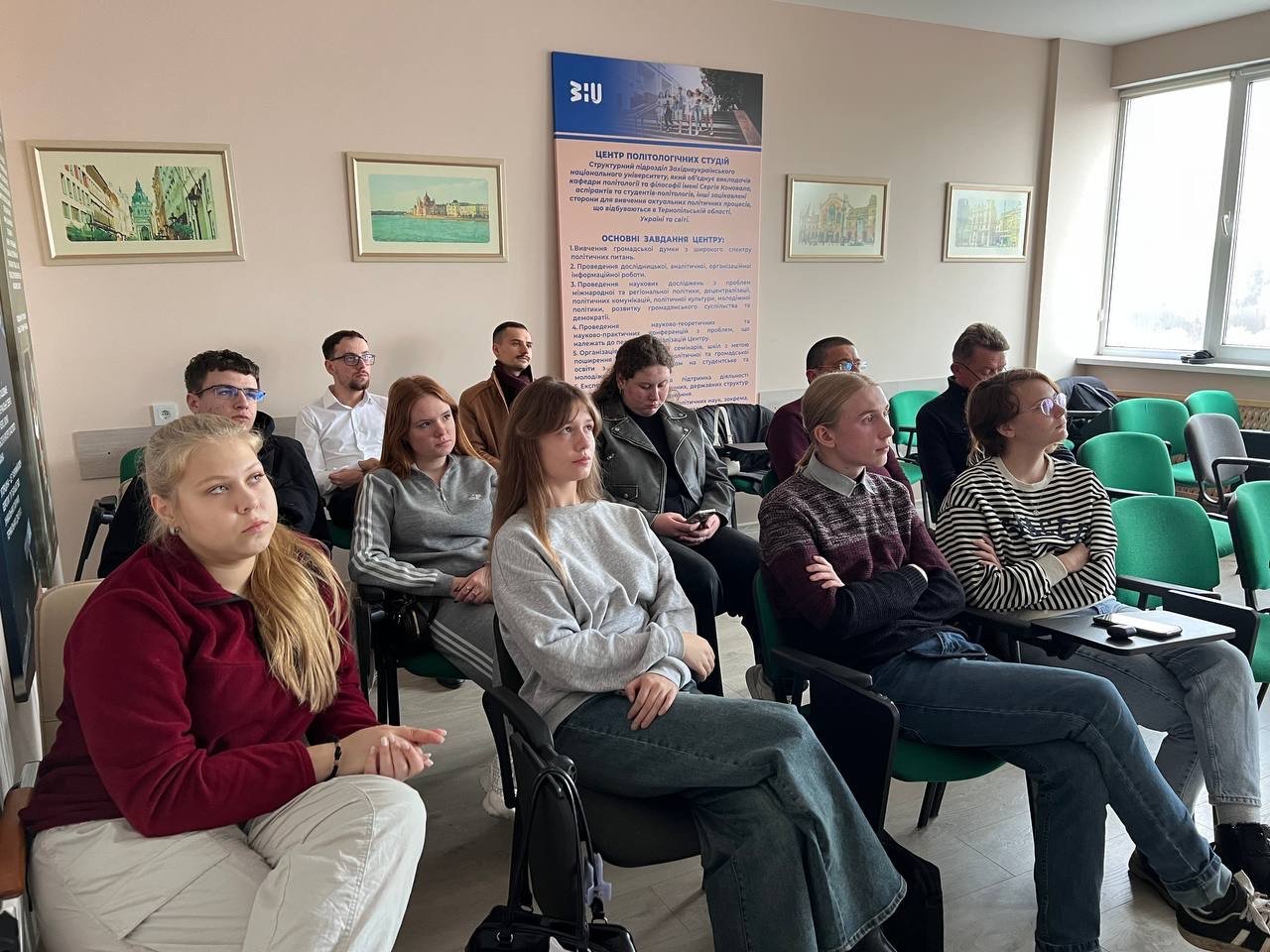 A meeting was recently held between undergraduate and postgraduate students and lecturers from the ‘Political Science’ programme at the Serhii Konoval Department of Political Science and Philosophy and Andreas Umland, PhD (in Political Science and History), an analyst at the Swedish Institute of International Affairs and an expert on Euro-Atlantic cooperation. The meeting was moderated by Myroslava Huryk, PhD in History and Associate Professor at the Serhii Konoval Department of Political Science and Philosophy.
Andreas Umland explained to the students how the academic community in Europe, the US and Canada interprets the causes and origins of the Russian-Ukrainian war. He presented the various viewpoints of individual influential academics and researchers, explaining where they see the roots and causes of the conflict. This understanding is essential, as the work of these world-renowned experts often shapes attitudes towards the war in broad academic and political circles in the West. Dr Umland particularly emphasised that there is a whole spectrum of explanations within the academic discourse, and that is precisely why it is important for Ukraine to work actively to refute false narratives and erroneous conclusions which, by distorting reality, harm Ukrainian interests.
Following the lecture, those present—including undergraduates, postgraduates and lecturers—had the opportunity to ask Dr Umland questions. The discussion covered a variety of pressing topics: the extent to which Russian influence remains potent in shaping perceptions of the causes of the war within academic circles; whether Ukraine remains at the centre of Western discourse; and the internal and external trends currently being observed in Russia.
The meeting made a valuable contribution to the students’ understanding of global political processes. At a time when Ukraine is fighting for its freedom and independence, it is crucial to understand how Russia’s aggression is perceived and explained in allied countries, as well as the factors influencing this perception. This is a key area that requires ongoing work to strengthen international support for Ukraine.
We would like to extend our sincere thanks to Dr Andreas Umland for this meeting!