WUNU lecturer took part in an academic conference in Germany
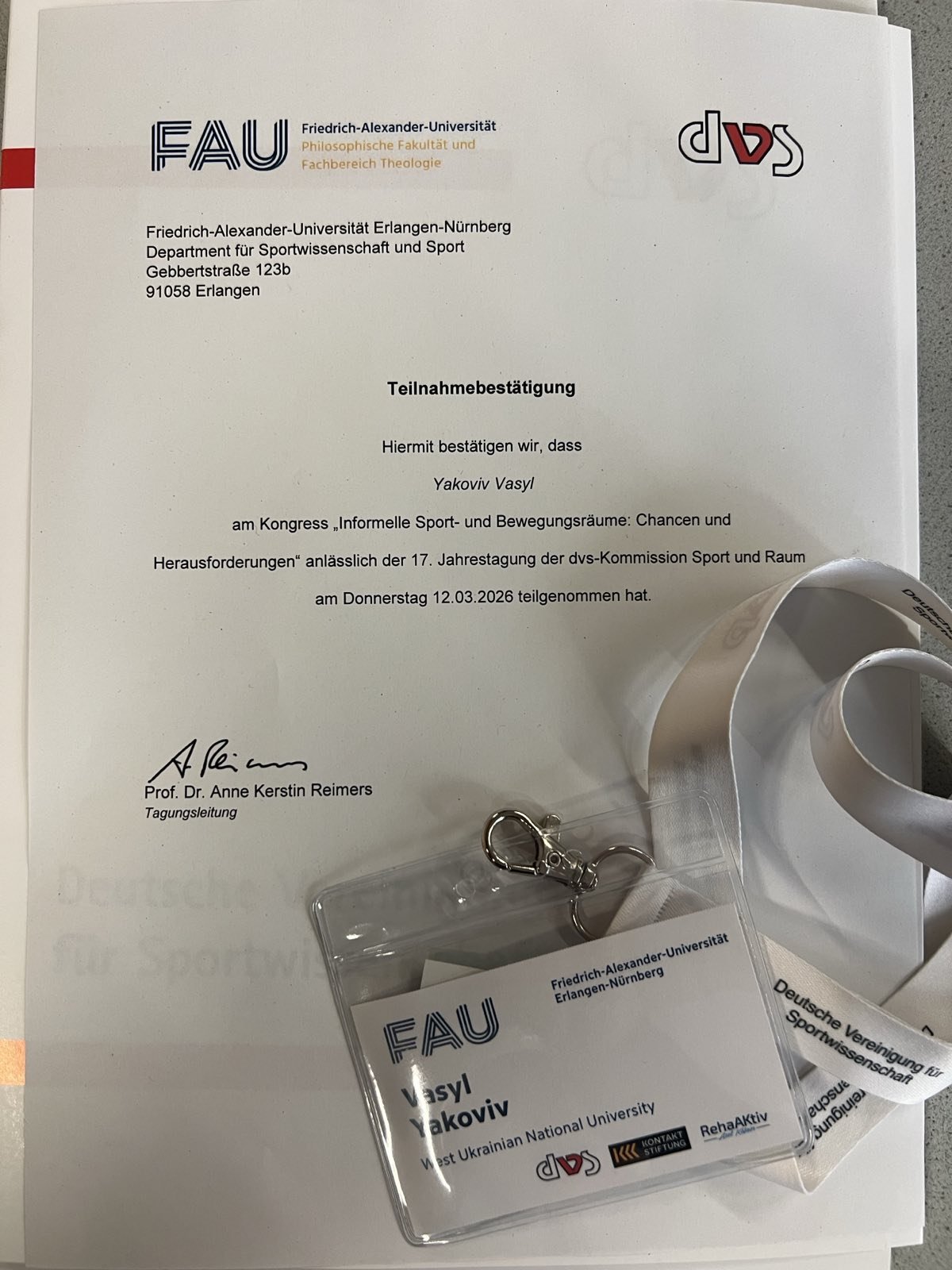
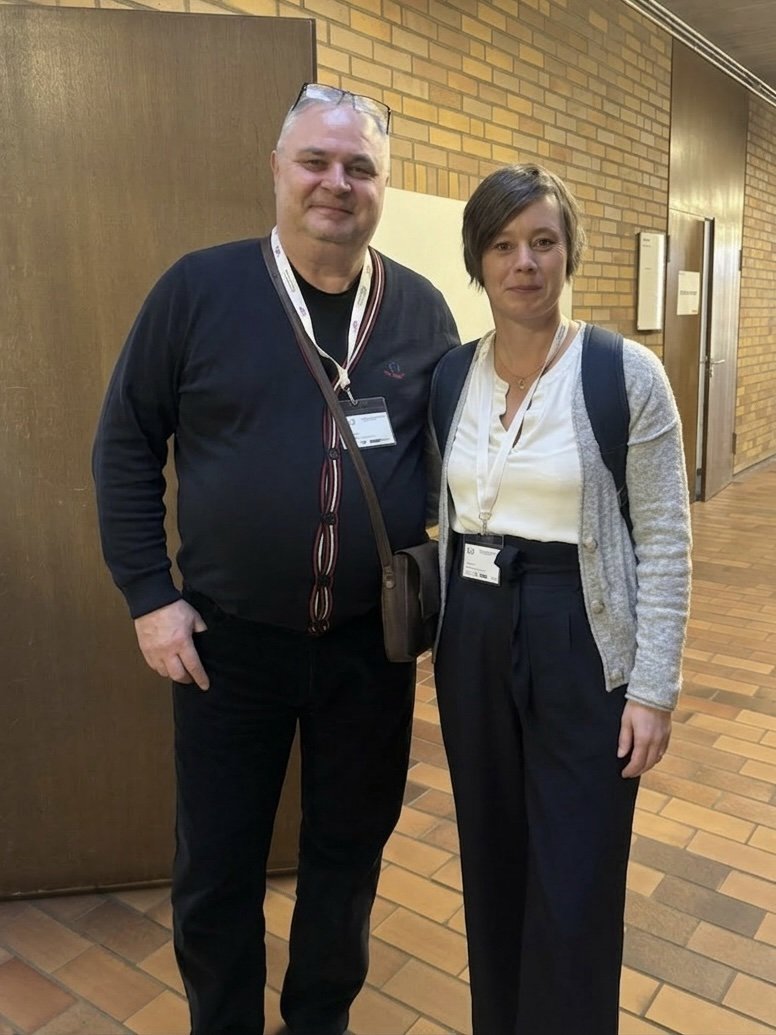
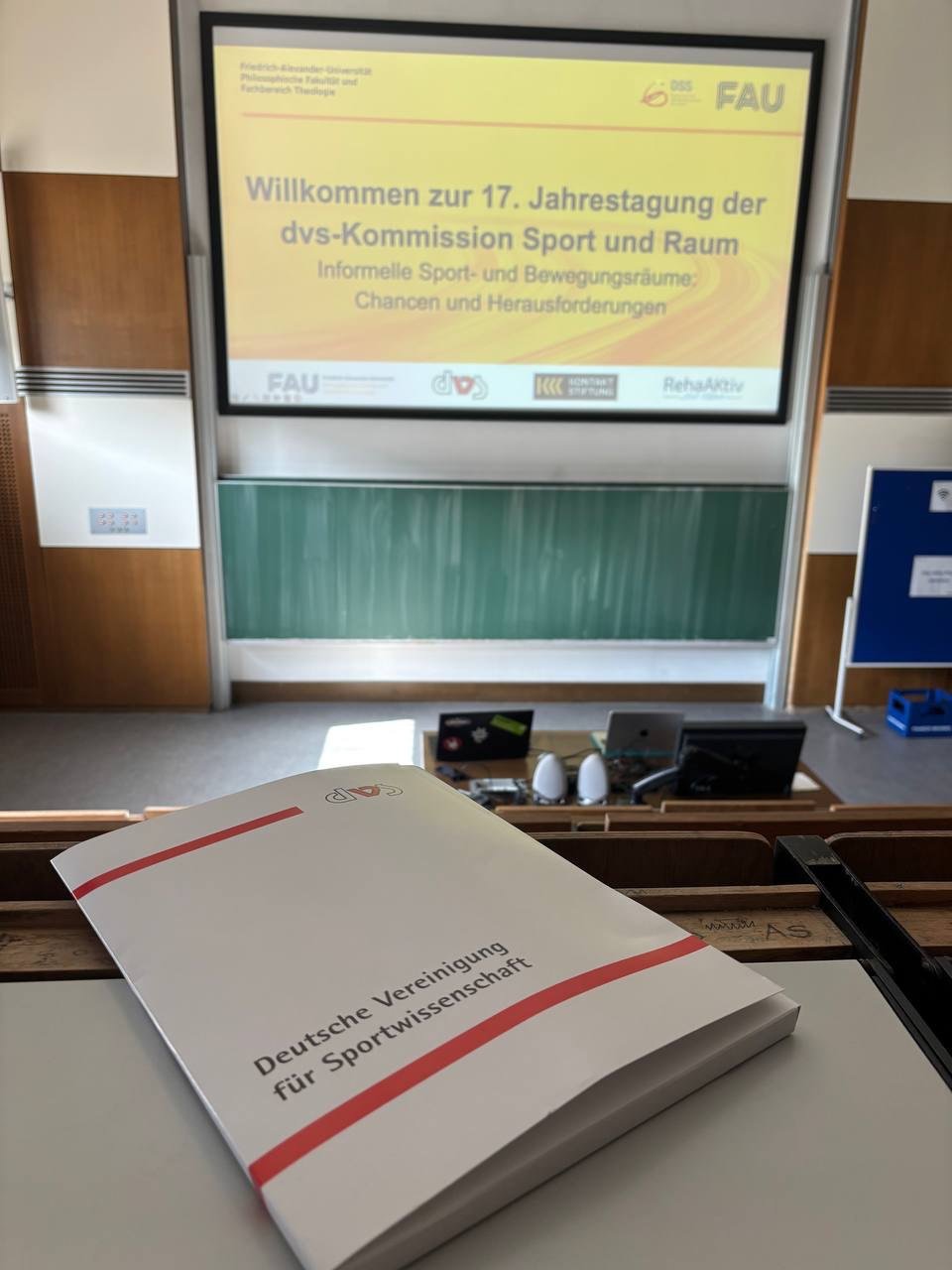
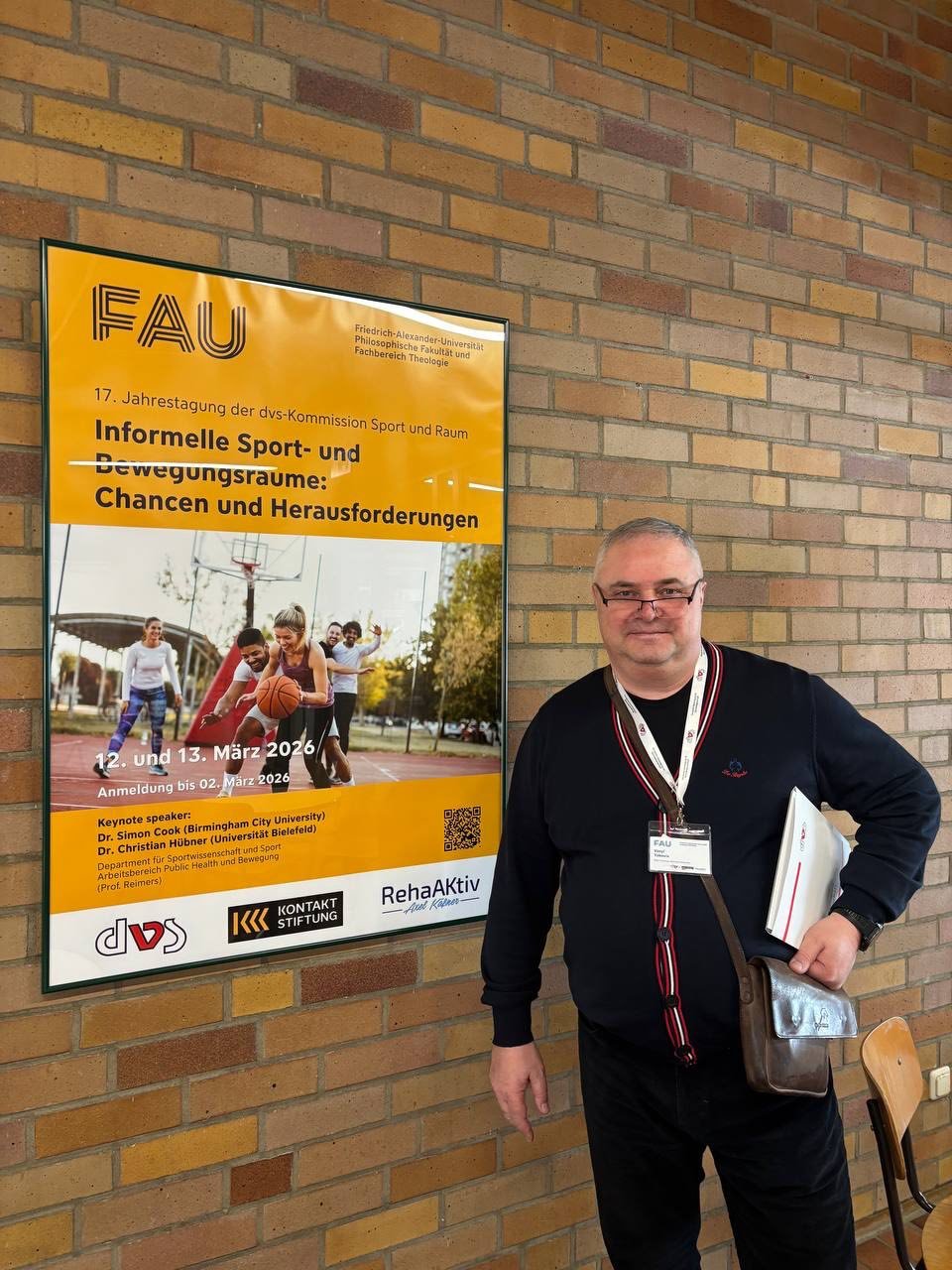 Vasyl Yakoviv, Senior Lecturer at the Department of Physical Rehabilitation and Sport at WUNU, took part in the academic conference ‘dvs-Tagung Sport und Raum 2026’ on the topic ‘Informelle Sport- und Bewegungsräume: Chancen und Herausforderungen’, which was dedicated to exploring contemporary approaches to the organisation of informal spaces for physical activity. The event took place on 12–13 March 2026 at Friedrich-Alexander-Universität Erlangen-Nürnberg in Erlangen, Germany.
The event was organised by the Public Health and Physical Activity Unit, led by Anne Kerstin Reimers, which is part of the Department of Sports Science and Sport at Friedrich-Alexander University Erlangen-Nuremberg.
The main aim of the conference was to discuss the role of informal spaces for sport and physical activity in modern society, as well as to identify the opportunities and challenges that arise during their planning and use. Informal sports spaces include city parks, public squares, school playgrounds, cycle paths, skate parks and other open areas that can be used for physical activity without the need for specialised sports facilities.
Particular attention was paid to the keynote presentation by Christian Hübner, entitled “Lost in Space and Time? Raumaushandlungsprozesse im informellen Sport”. The presentation examined the processes involved in the creation and use of spaces for informal sport. The report emphasised that participants in this type of activity often determine the rules for using the space, how it is organised, and the necessary equipment themselves. This involves active interaction between users and the urban environment, as well as the adaptation of existing infrastructure for various sports activities.
During the working session “Informal Sports and Activity Spaces for Children and Young People”, chaired by Tim Bindel, participants discussed the creation of open sports spaces for children and young people. In particular, they examined projects aimed at promoting active mobility among schoolchildren (cycling schemes), as well as the use of natural and urban environments to encourage physical activity among children. Such studies demonstrate the importance of creating safe and accessible sports grounds, cycle paths and other elements of sports infrastructure.
Another session – “Designing Sports Environments: Digital – Technical – Architectural”, moderated by Franziska Beck, focused on contemporary technological and architectural aspects of organising sports spaces. Participants discussed the impact of sports mobile apps on motivation to exercise, the use of simulation trainers to develop cycling skills in older people, and new approaches to creating architectural elements for rock climbing in urban spaces. Such solutions demonstrate how modern sports facilities can be integrated into public spaces and combine the functions of recreation, training and social interaction.
Overall, the conference proceedings highlight the importance of developing modern sports infrastructure, which includes not only traditional stadiums and sports halls, but also open-air multi-purpose playgrounds, cycle routes, workout zones and other sports facilities. Such spaces must be safe, accessible to people of all ages and adapted to the urban environment.
The findings of the conference therefore indicate that the development of informal sports spaces is a key area of contemporary sports science and practice. The creation of high-quality sports facilities and equipment in outdoor settings helps to increase physical activity among the population and promote a healthy lifestyle.