Webinar by Luca Rolle, ‘The Psychology of Personal and Societal Self-Realisation in Today’s Complex Realities’
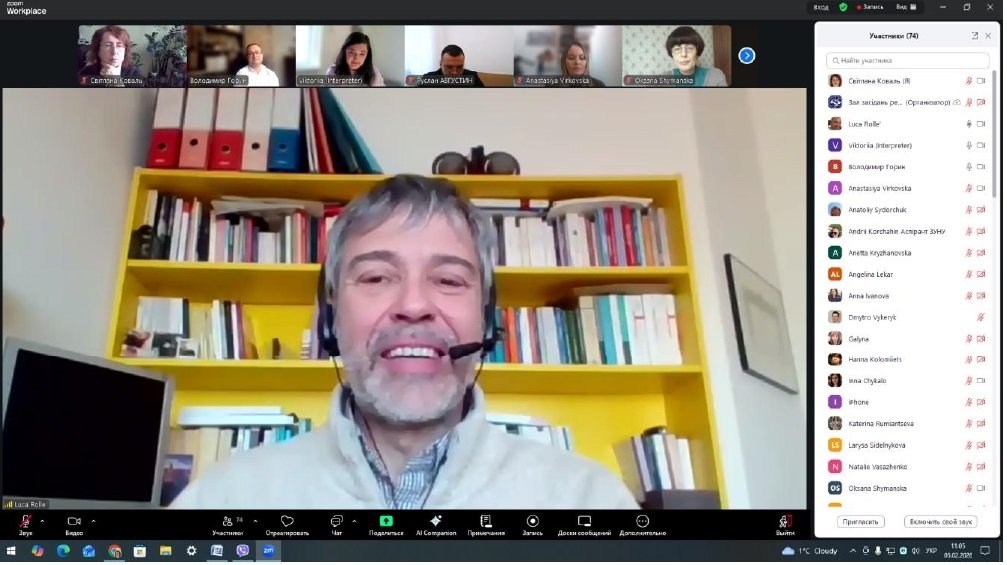 On 5 February 2025, West Ukrainian National University hosted a webinar on ‘The Psychology of Personal and Societal Realisation in Today’s Complex Realities’.
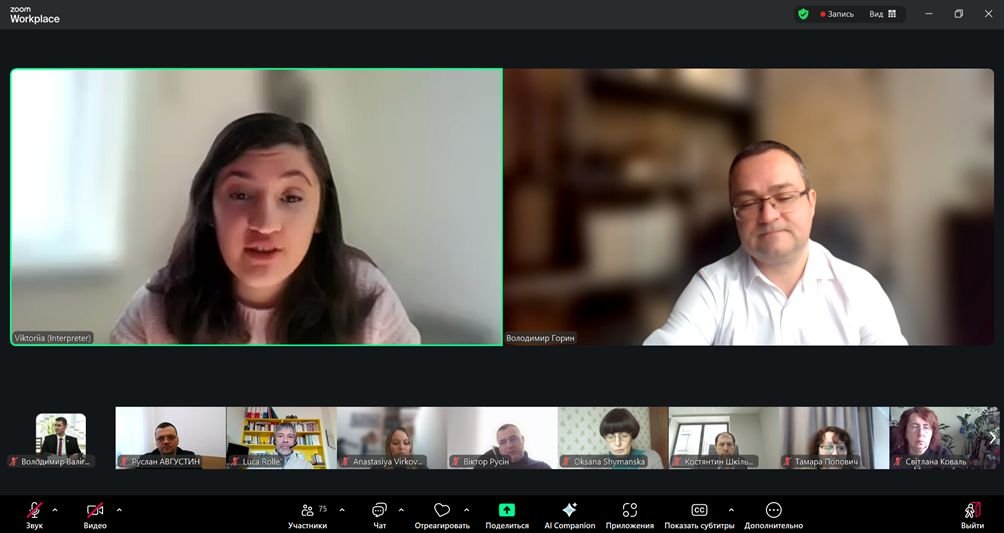
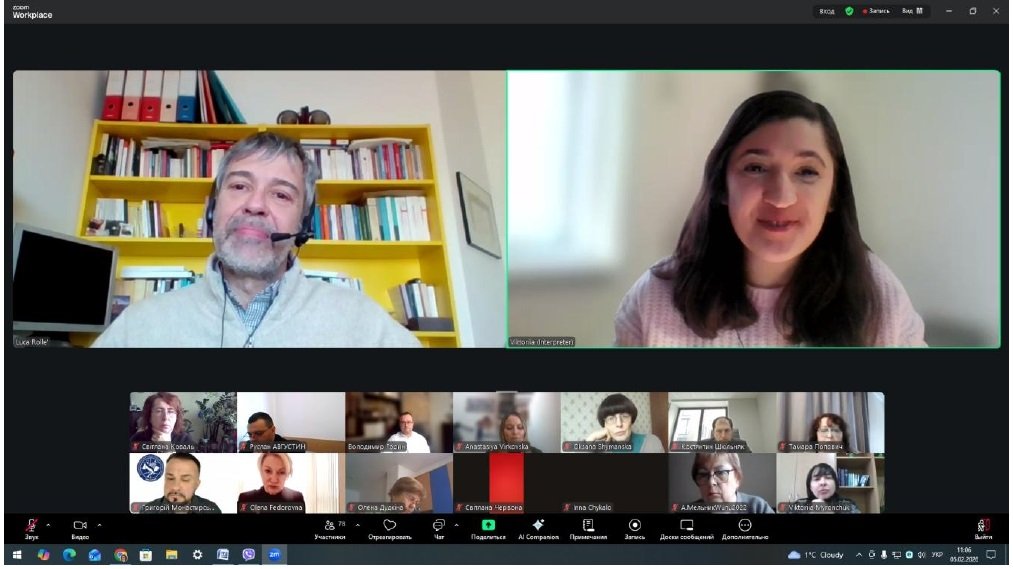
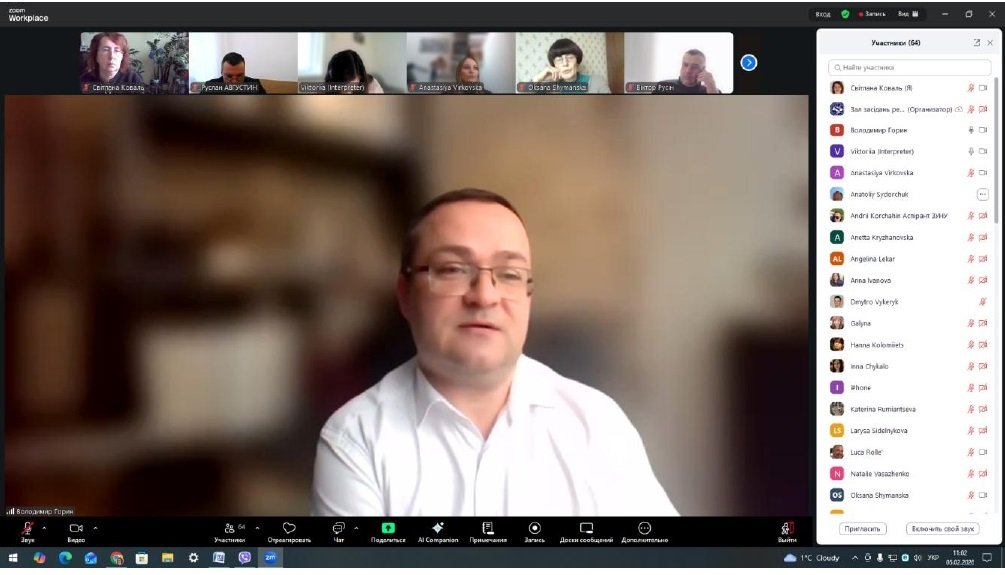
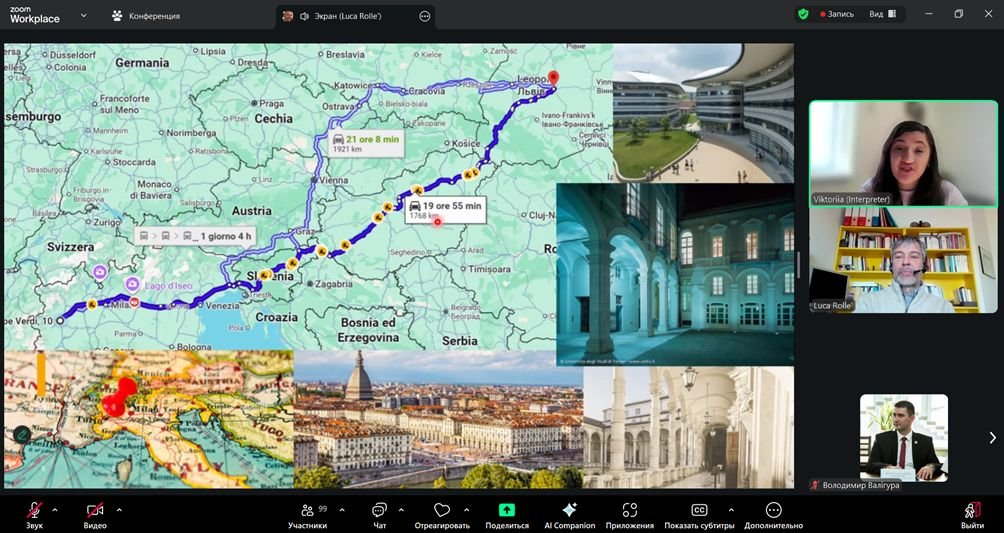
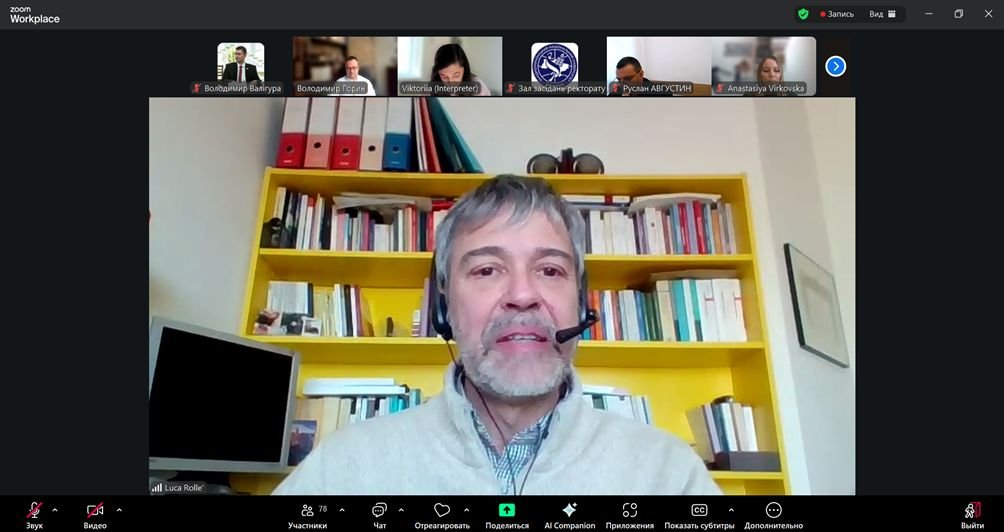
The featured speaker for the event was Luca Rolle, professor of dynamic psychology at the University of Turin, clinical psychologist, and head of the School of Specialization in Health Psychology (Italy). The webinar was moderated by Volodymyr Horyn, Doctor of Economics, professor of the S.I. Yuriy Department of Finance at WUNU.
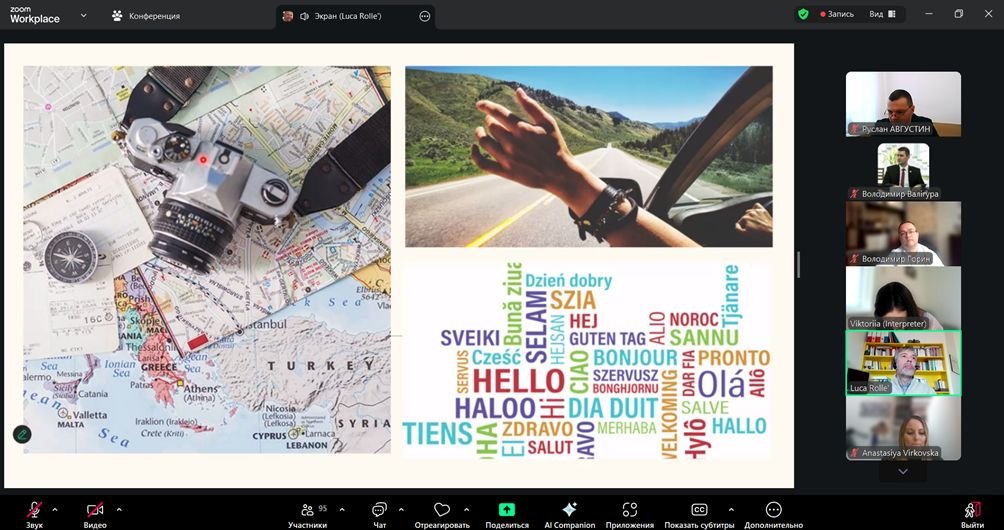
The webinar focused on exploring current psychological challenges related to the self-realization of the individual and their socio-functional role in conditions of growing uncertainty, crisis situations, and increased emotional stress.
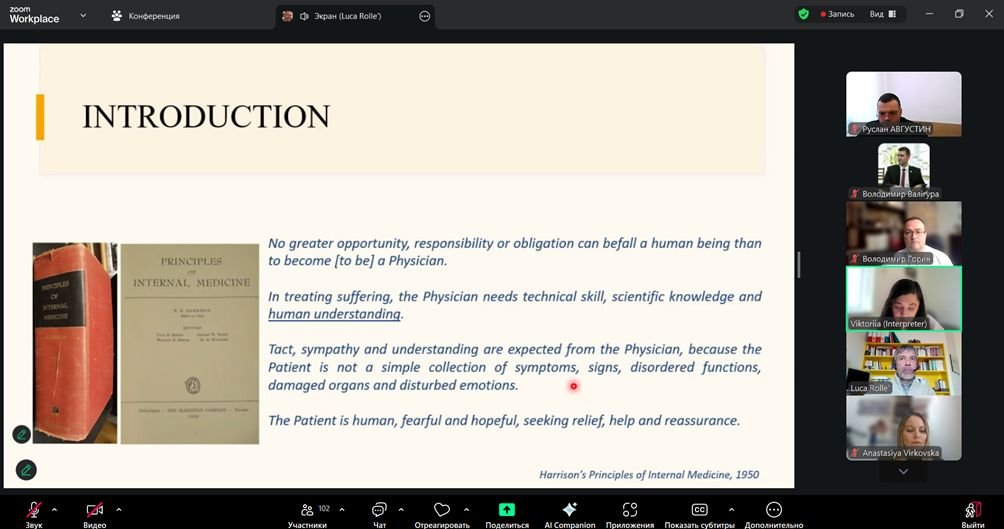
Professor Luca Rolle offered a comprehensive view of the role of the psychological dimension in the professional practice of doctors and in the lived experience of patients. In his report, Professor Rolle emphasised that the interaction between doctor and patient is not only an instrument for the transfer of knowledge and the performance of medical procedures, but also a complex form of interpersonal communication that reveals the subjectivity of both parties. In this process, the patient is not a passive object of treatment, but a bearer of a unique experience of illness, pain and fear that requires recognition and respect. This approach is directly related to the psychology of self-realisation, as the opportunity to be heard and recognised helps maintain a sense of dignity, control over one's own life, and active participation in decision-making.
A separate analytical section was devoted to barriers to effective communication between doctors and patients, which are both objective and subjective in nature. Stressful working conditions, time constraints and fear of legal liability complicate the ability to engage in meaningful dialogue, while insufficient training in dealing with the emotional aspects of illness limits the doctor's ability to respond appropriately to the patient's experiences. The speaker emphasised that quality communication promotes better understanding of the patient's condition, facilitates the absorption of medical information and creates conditions for responsible decision-making. At the same time, for the doctor, such interaction becomes a space for professional development that goes beyond purely technical competence.
During the Q&A session, the discussion focused on the risks of professional burnout among healthcare workers, resulting from constant emotional stress and excessive empathy toward patients' problems. Professor Luca Rolle emphasised that a doctor's personal fulfilment is impossible without awareness of their own limits and concern for their own well-being. The ability to speak openly, the support of others, and physical activity were identified as important factors in maintaining professional resilience and inner balance.
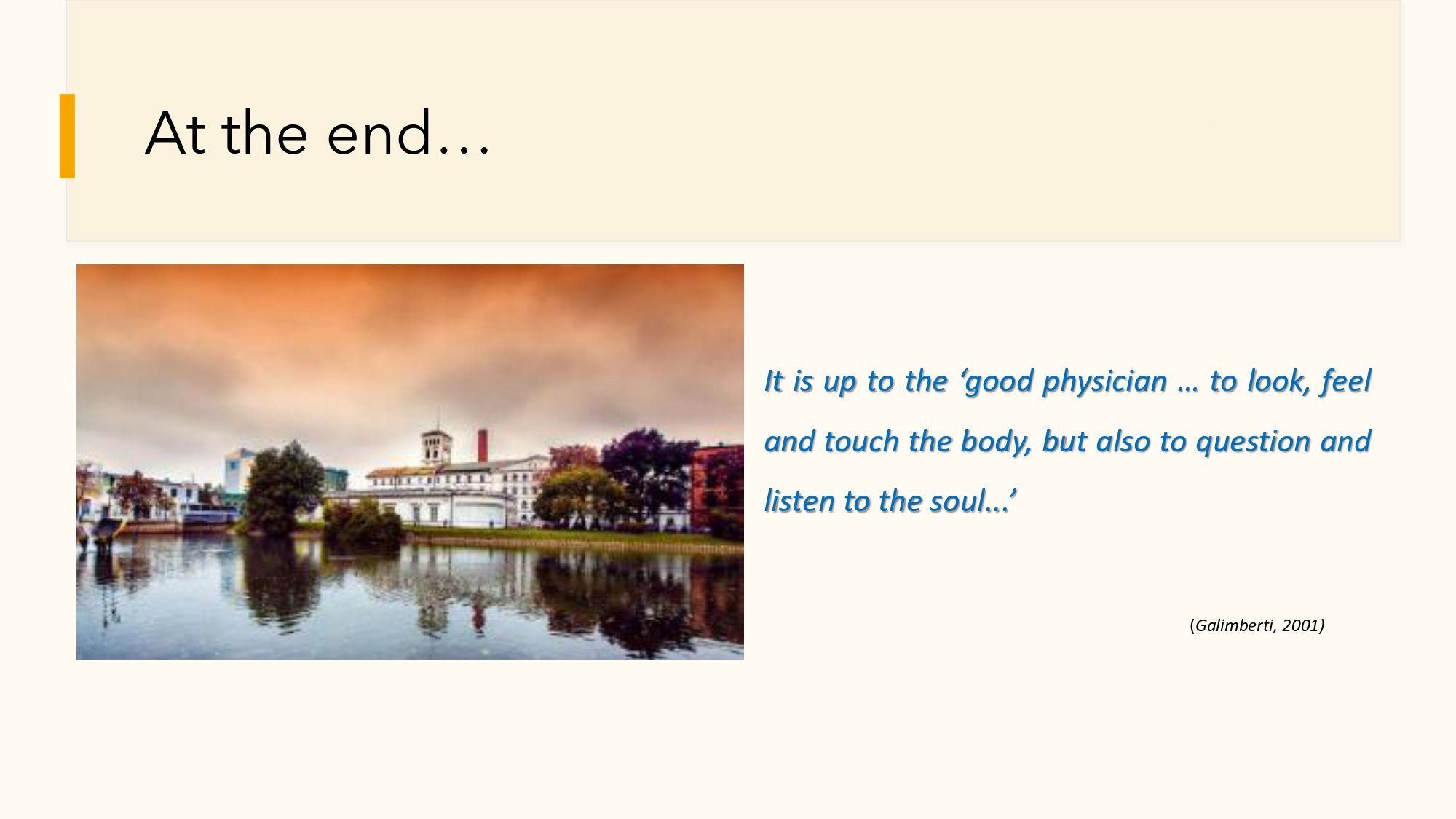
In conclusion, the speaker noted that a competent doctor should not only work with the body, but also be attentive to the inner world of a person, ask questions, and listen to the soul. This statement symbolically reflects the broader meaning of the webinar, which demonstrated that in the context of modern social challenges, the psychological dimension of self-realisation is of decisive importance for both patients and medical professionals. Interaction based on empathy, respect and recognition of subjectivity becomes not only a factor in effective treatment, but also an important condition for personal and social development in today's complex realities.