Prevention of Money Laundering and Fraud in the Management of EU Funds
 An interactive lecture on fraud and money laundering prevention in the management of European Union funds was recently held. The event was aimed at raising awareness of modern financial threats and developing practical skills to combat economic crime in the field of public finance.
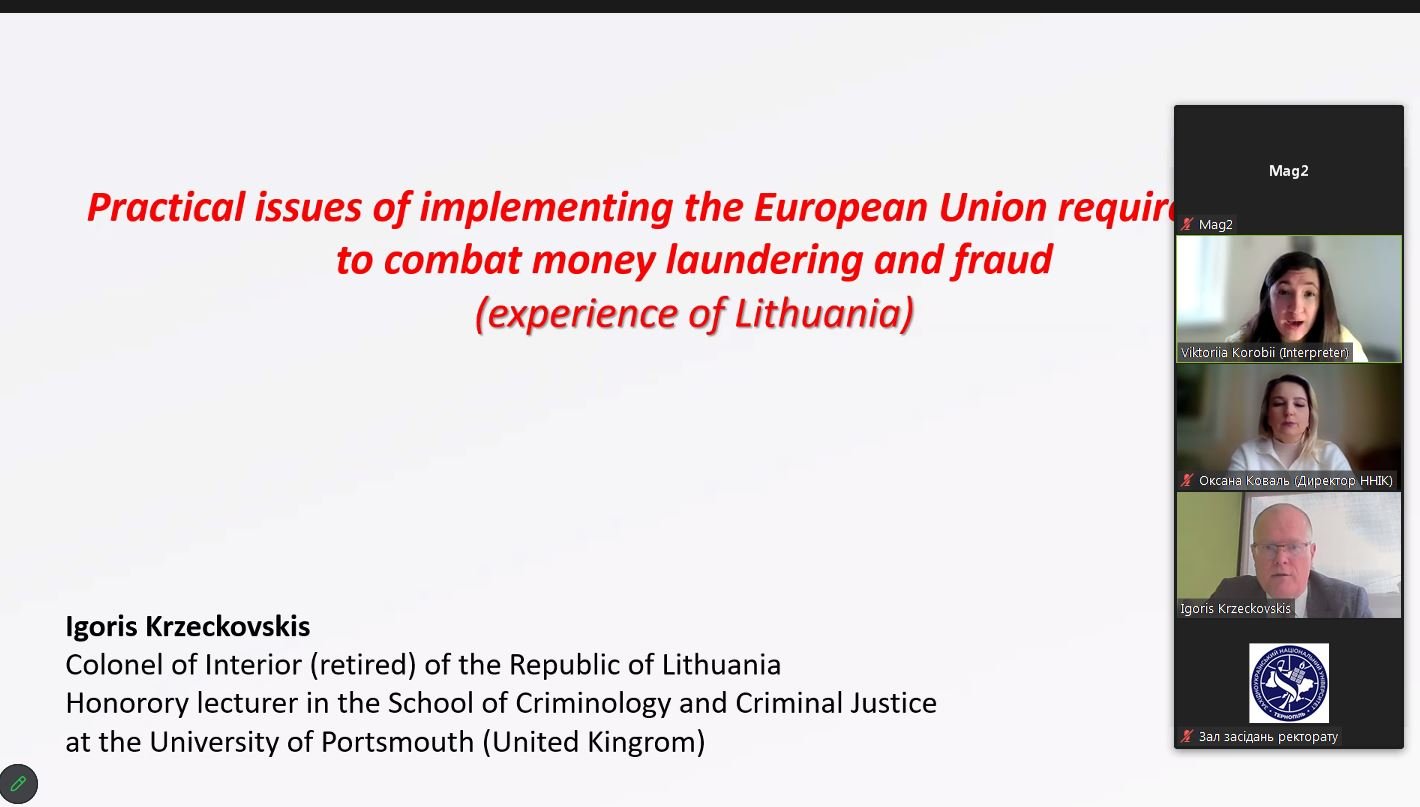
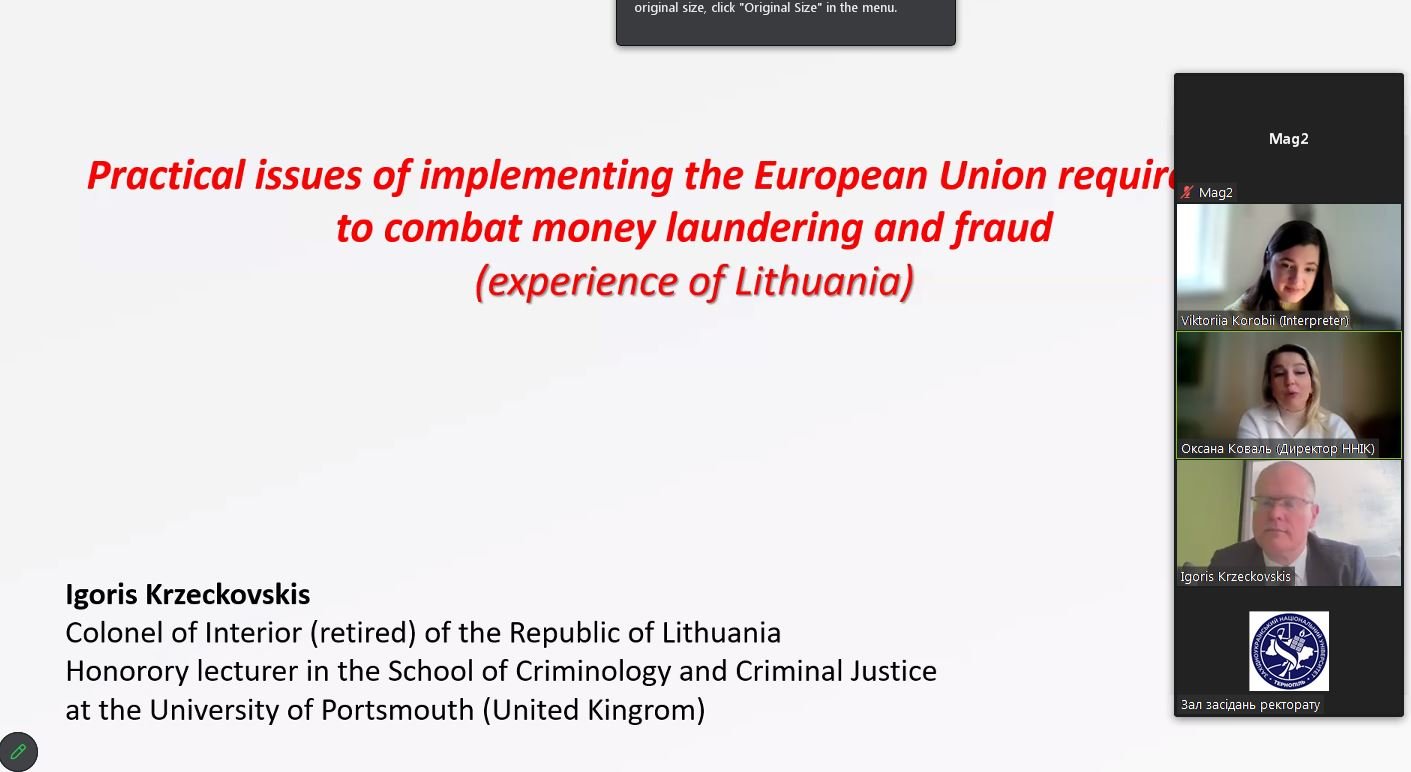
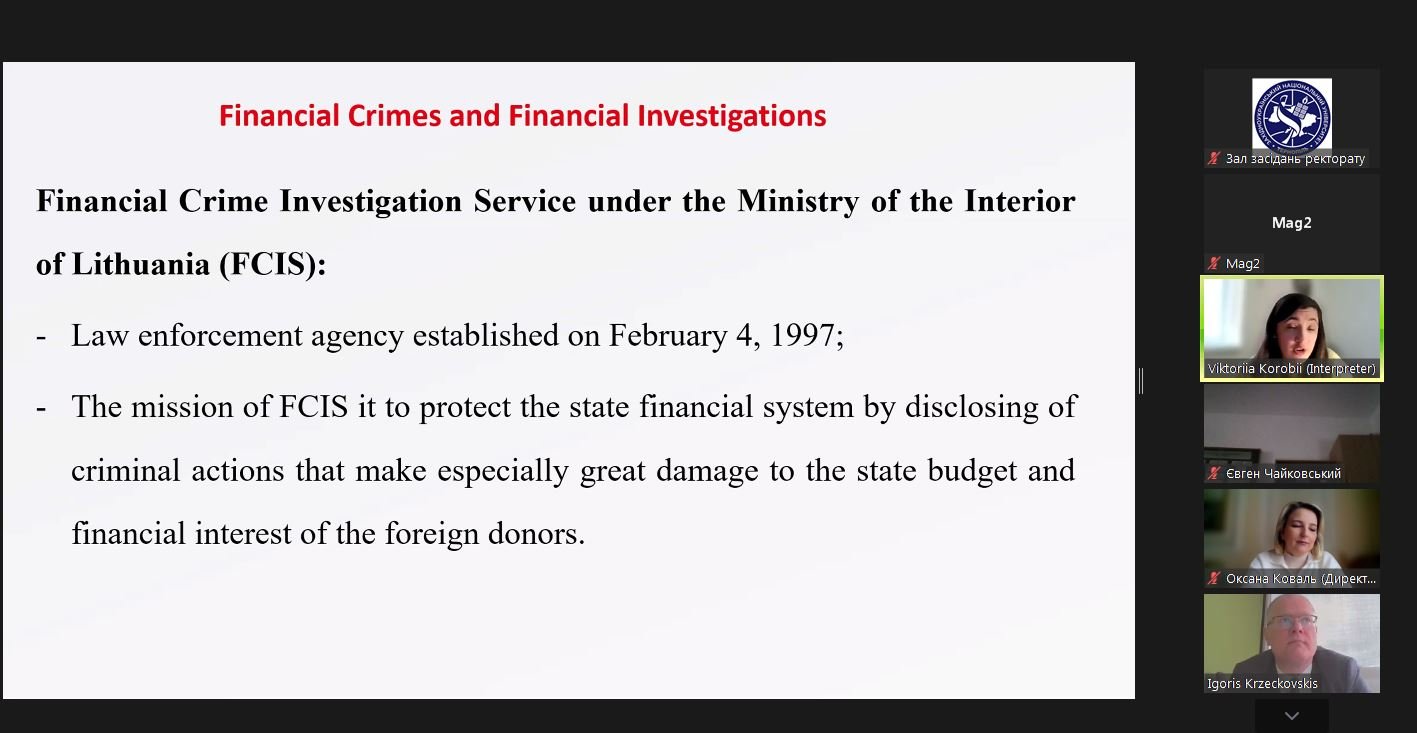
The speaker - Igoris Krzeckovskis, international consultant on combating financial crime and asset recovery at the United Nations Office on Drugs and Crime, honorary lecturer at the School of Criminology and Criminal Justice at the University of Portsmouth (United Kingdom), and former advisor to the Financial Crime Investigation Service of the Ministry of the Interior of the Republic of Lithuania, delivered a lecture that was both practical and informative. The combination of international experience and practical work in the field of financial investigations made the lecture highly relevant.
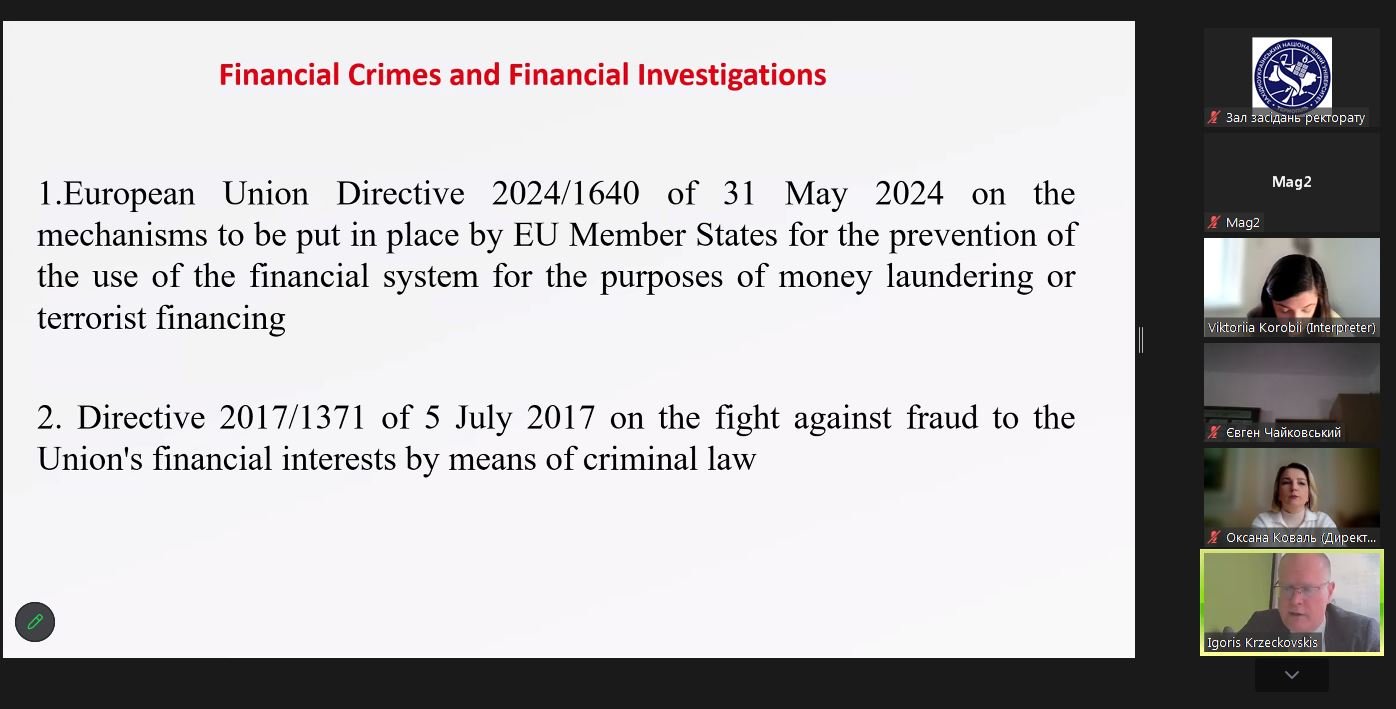
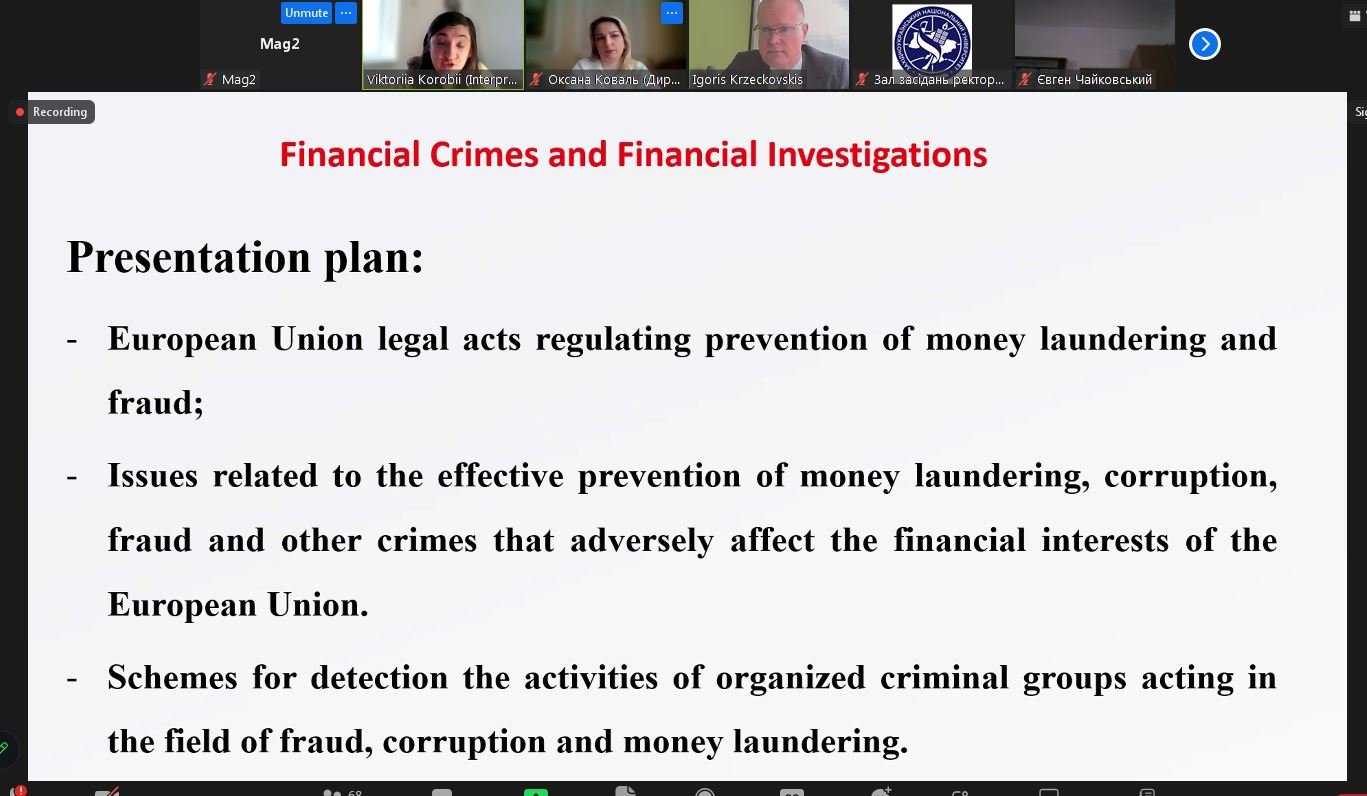
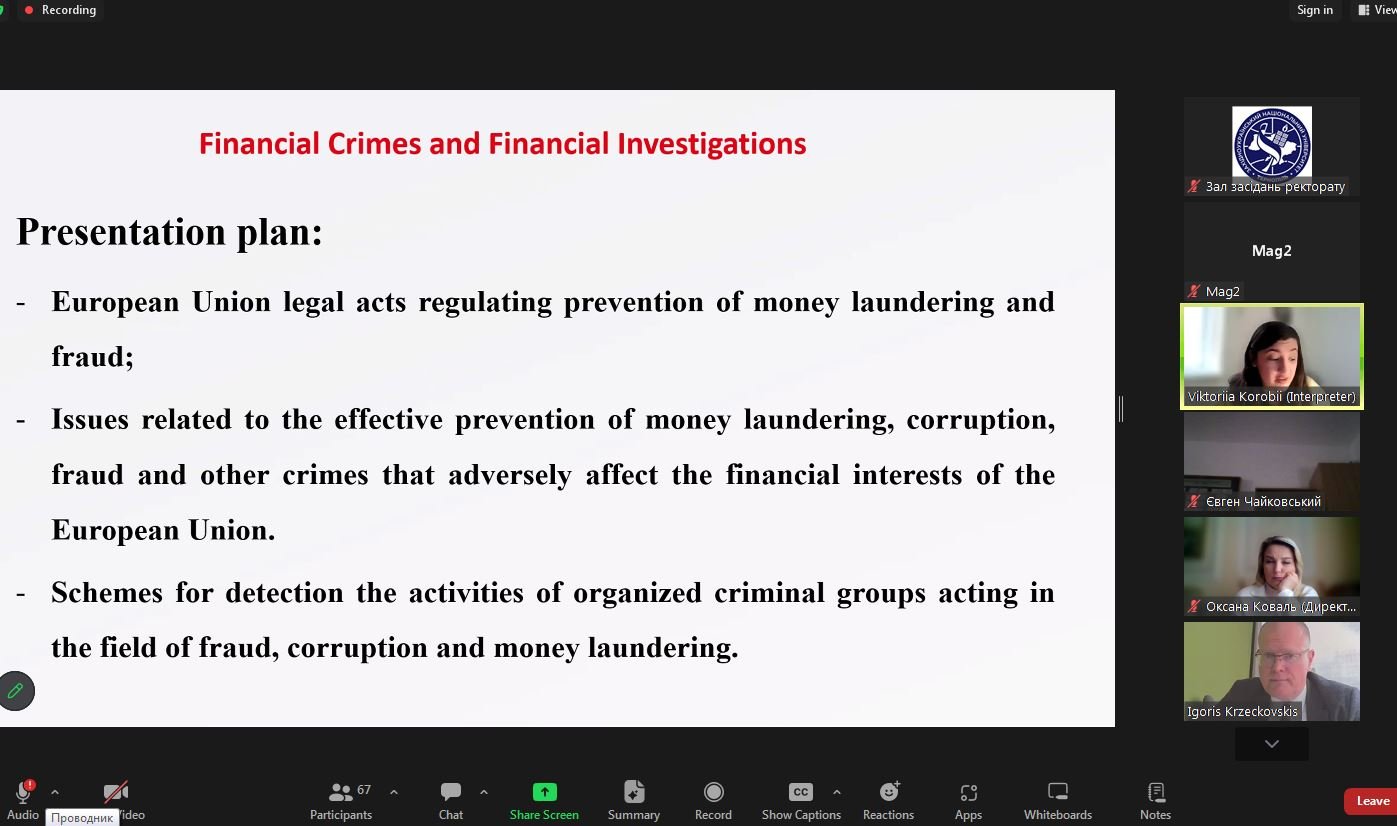
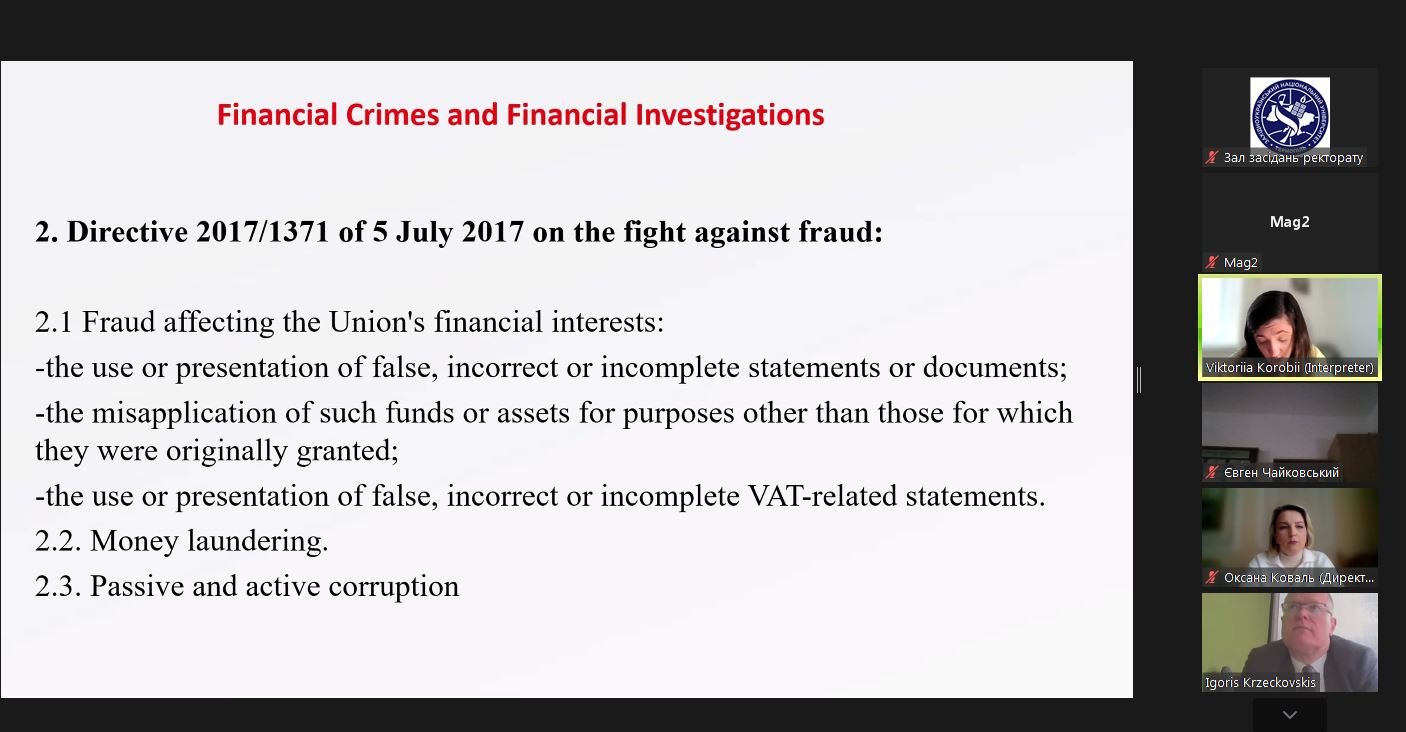
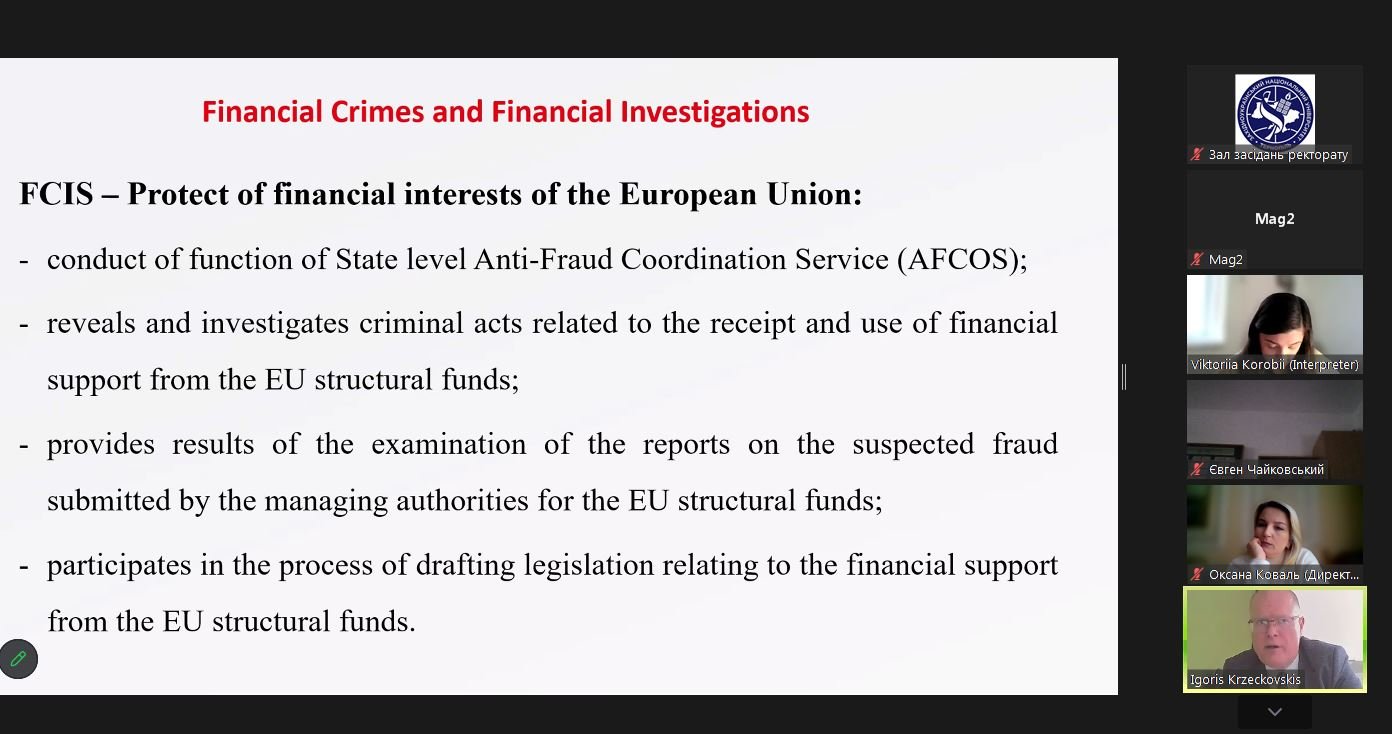
During the presentation, practical aspects of implementing European requirements in the field of AML/CFT were discussed in detail, in particular the latest EU directives, the system for monitoring the use of funds, and tools for protecting the financial interests of the Union. The lecturer emphasized the importance of interagency cooperation, a risk-based approach, and timely information exchange between national and international institutions.
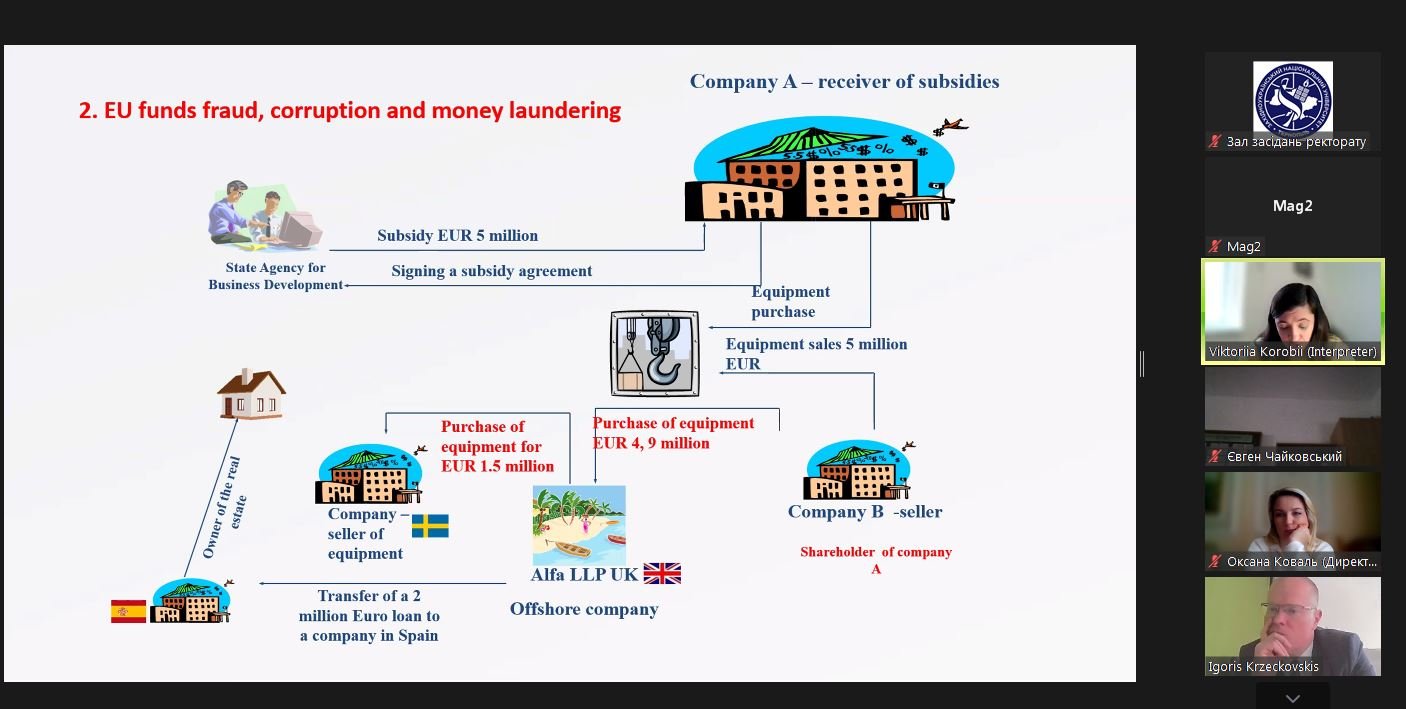
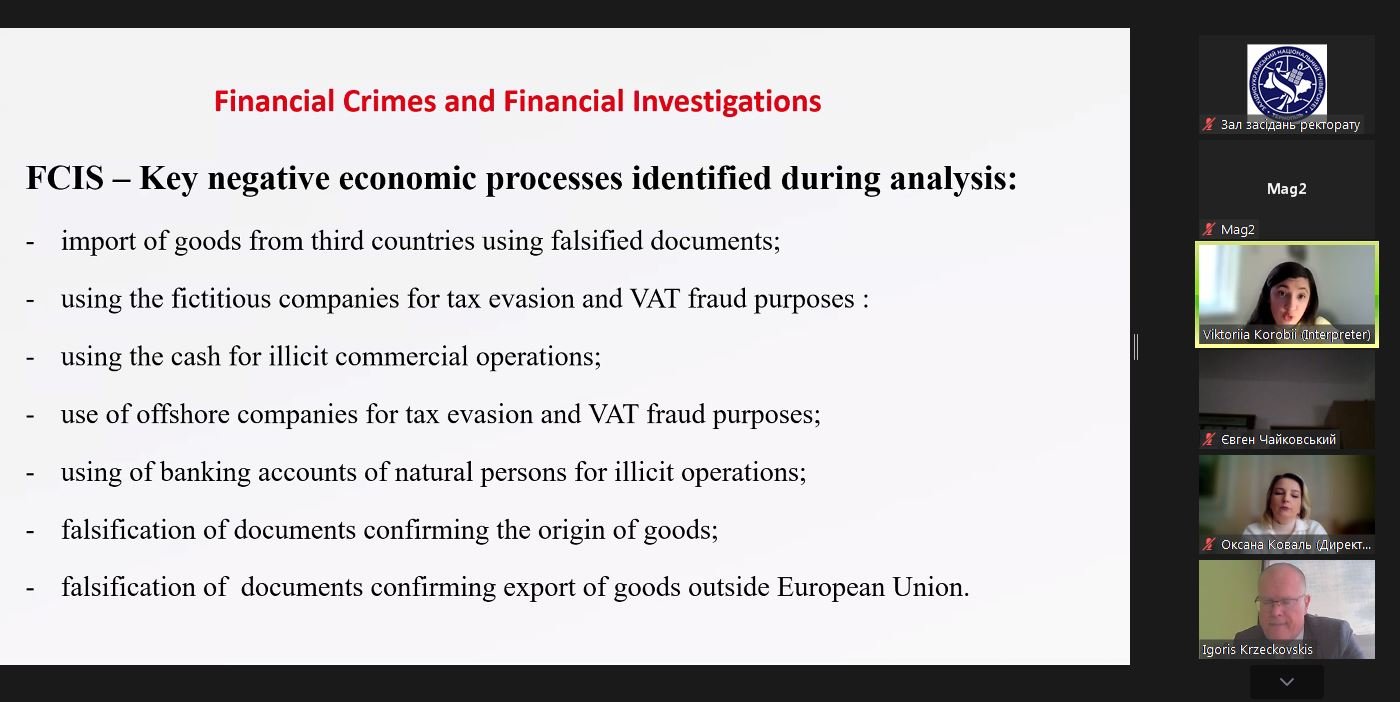
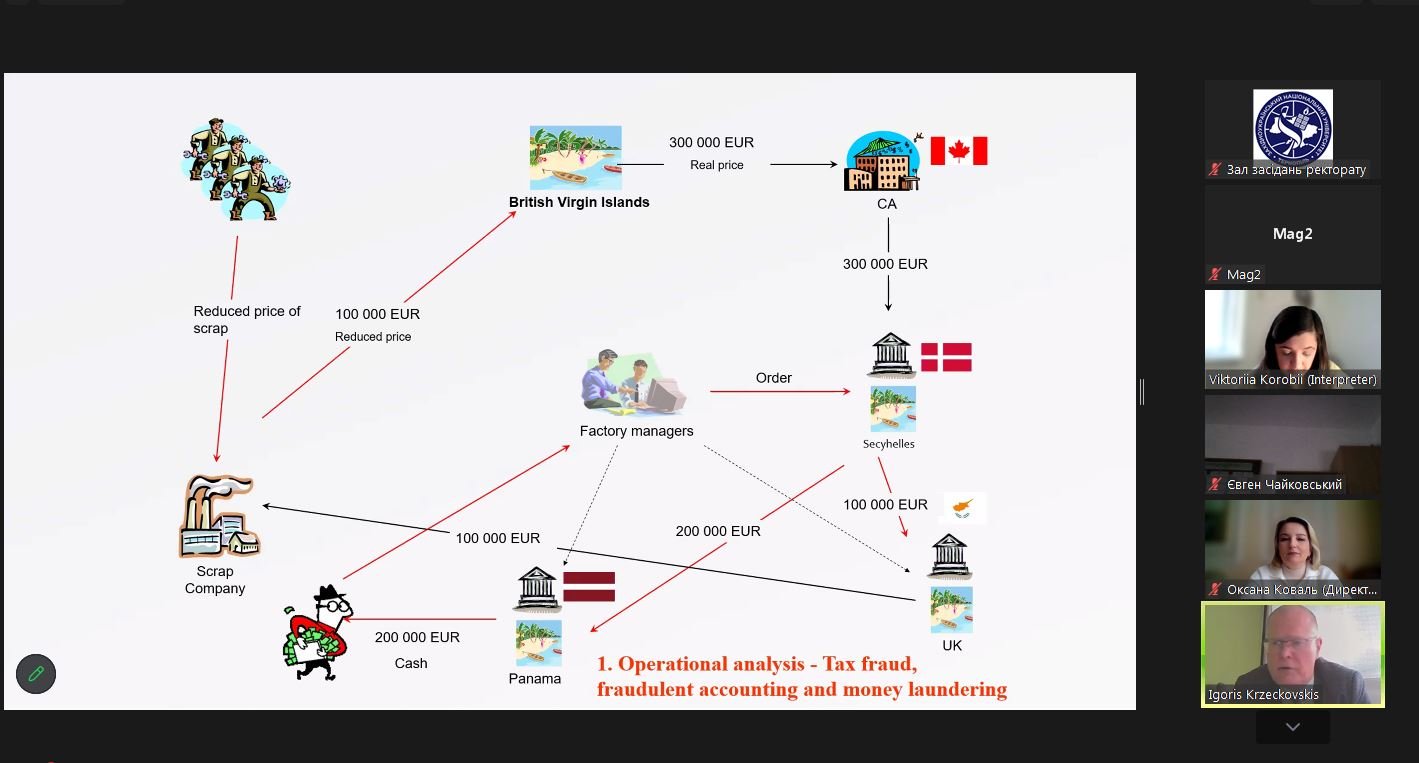
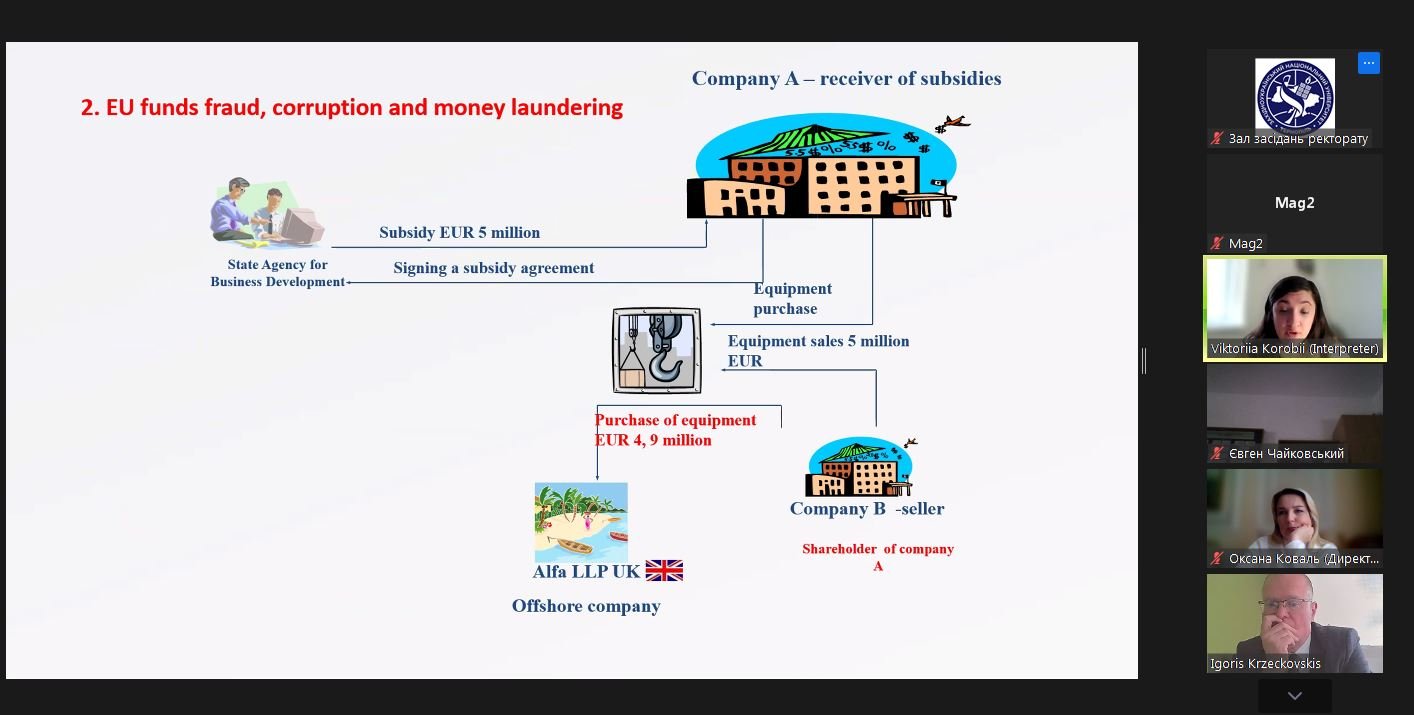
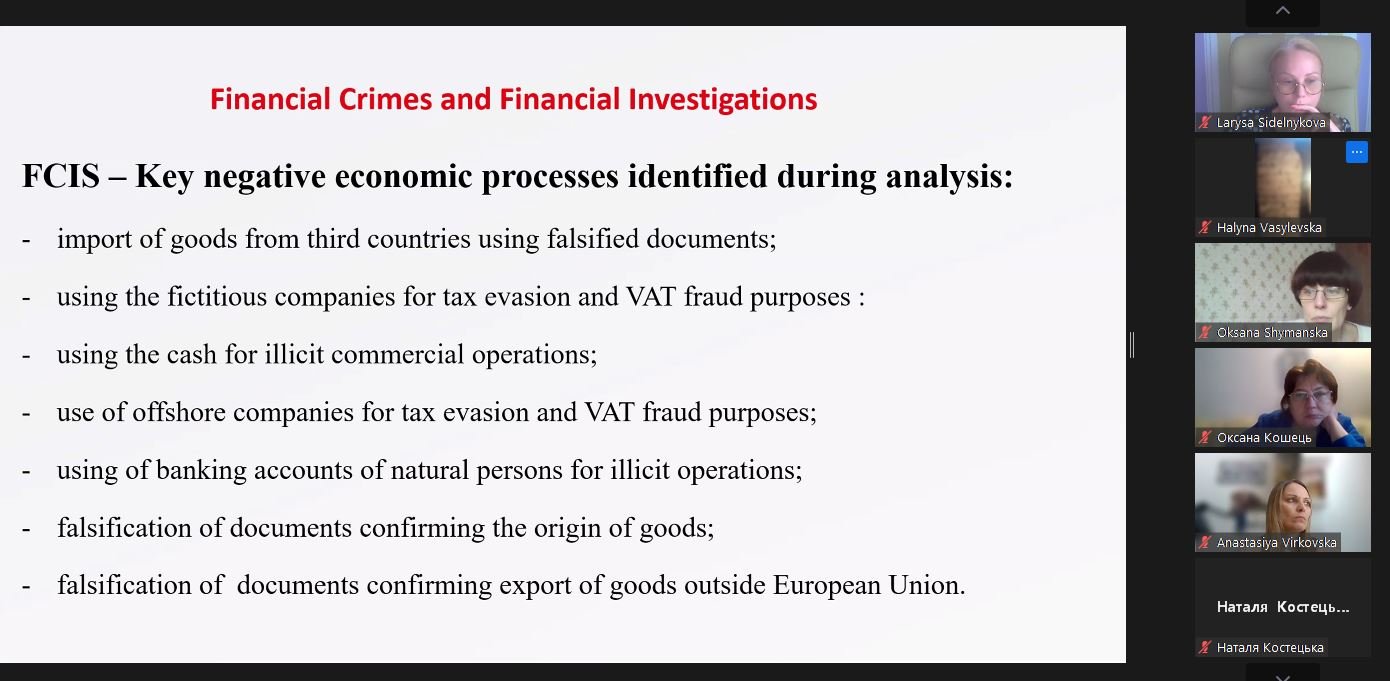
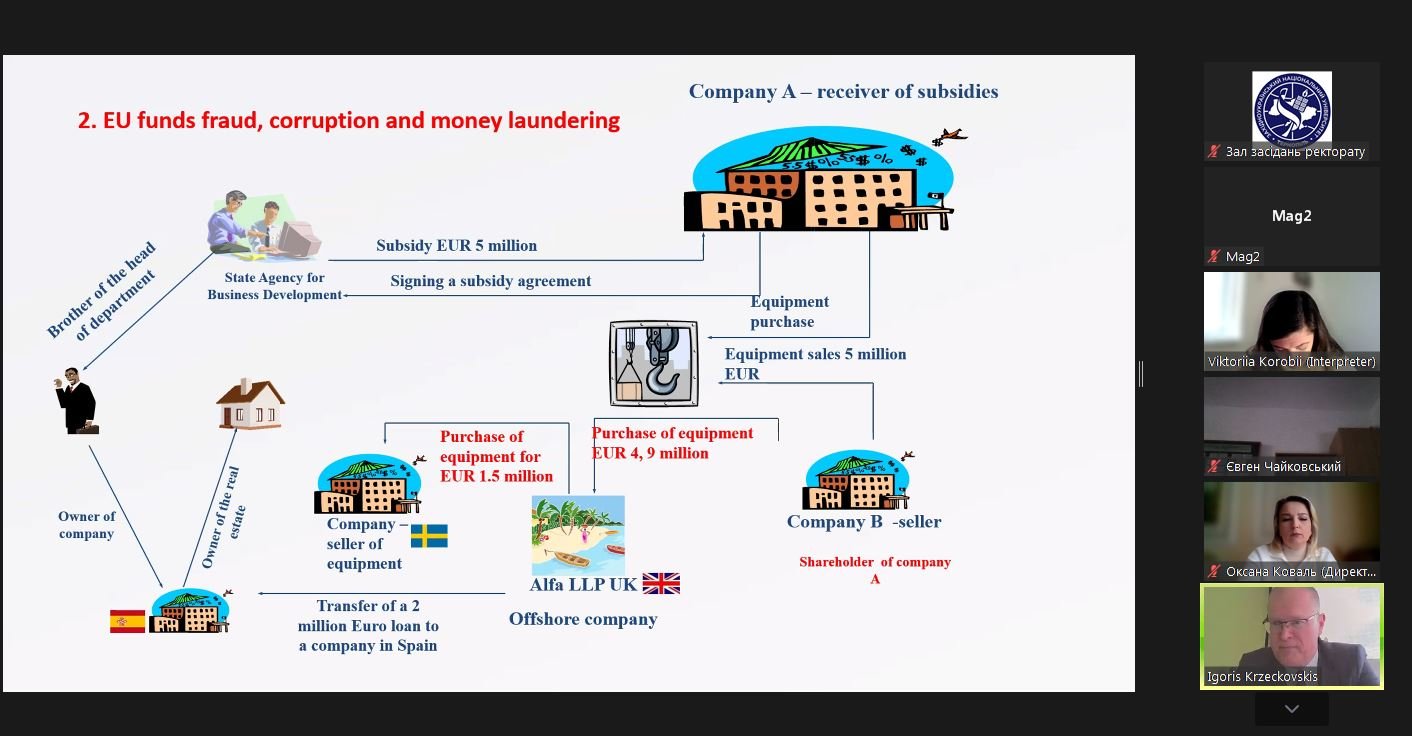
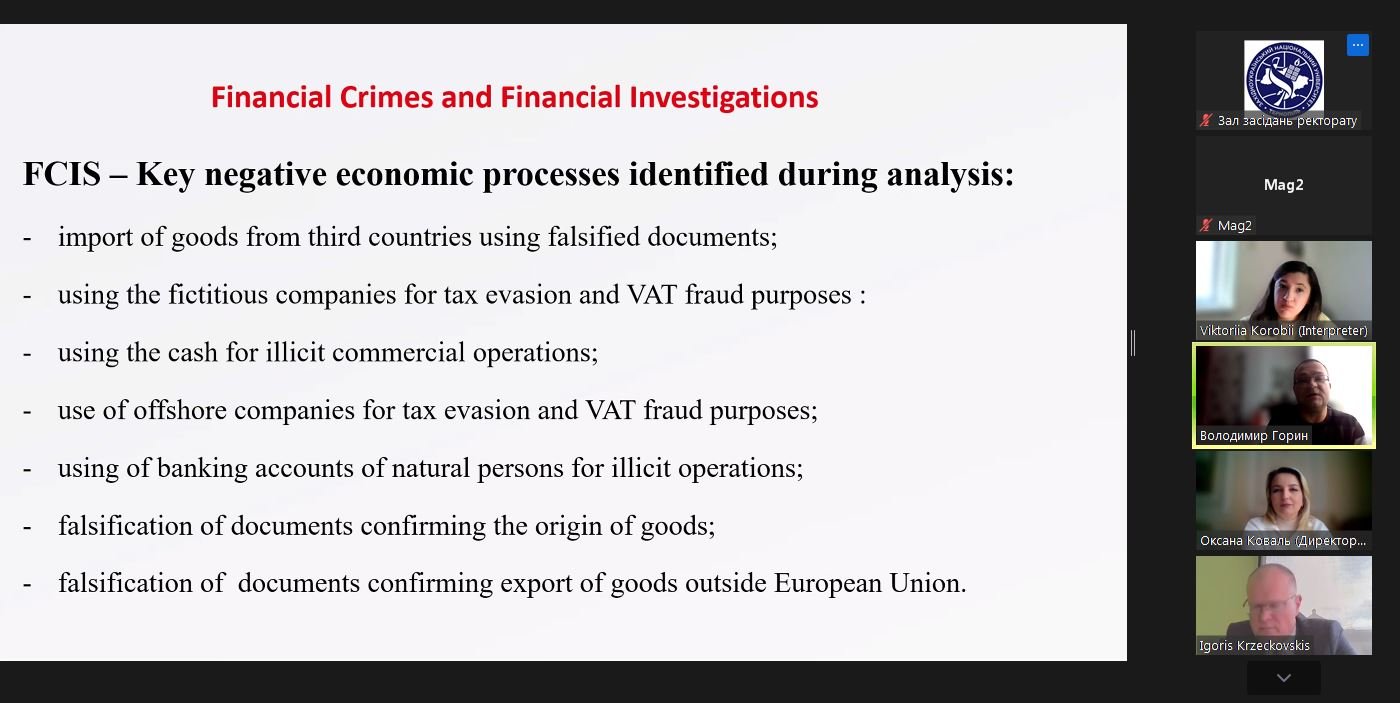
A section of the lecture was devoted to methods of detecting financial crimes. Participants were shown typical schemes of misuse of EU funds: the use of fictitious and “transit” companies, the involvement of offshore jurisdictions, manipulation of contracts and reporting, as well as the illegal receipt or misuse of grants and subsidies. Specific cases were used to examine the logistics of financial analysis, tracing funds, and documenting evidence.
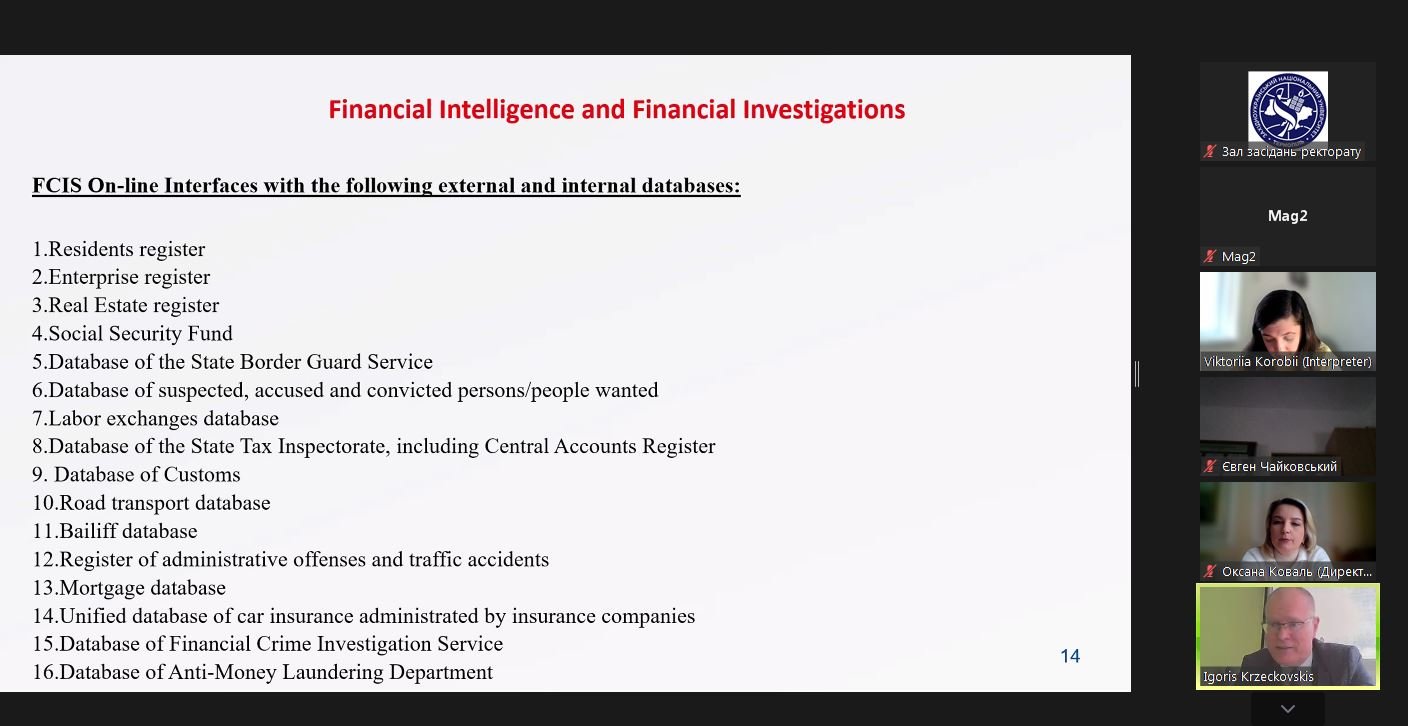
Much attention was devoted to the role of financial intelligence, digital registries, and analytical databases in exposing complex cross-border schemes. “Effective counteraction to financial crimes is impossible today without data integration, international cooperation, and proper training of specialists,” noted Igoris Krzeckovskis in his presentation.
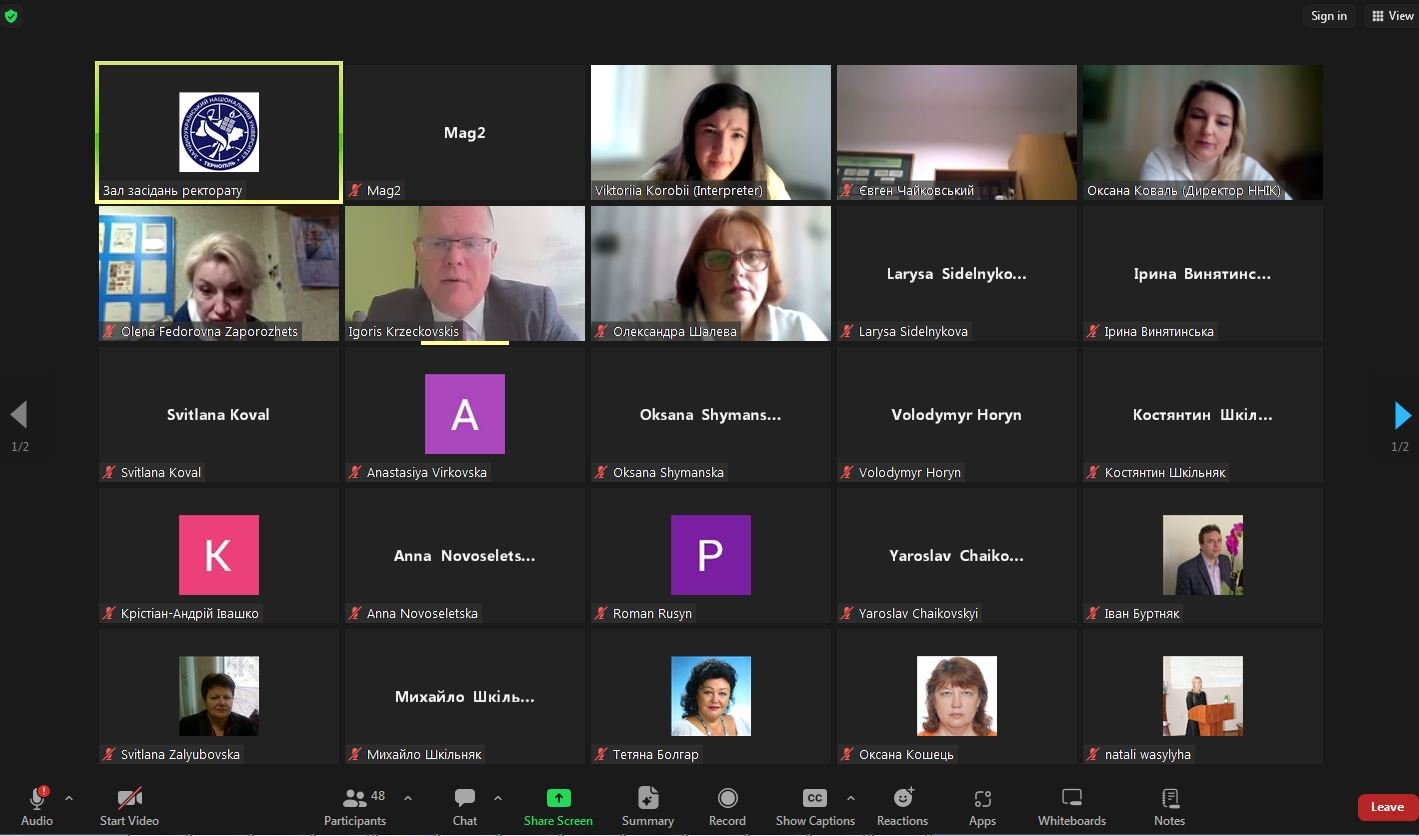
The event was held online and brought together teachers, researchers, graduate students, and practitioners interested in financial security and combating economic crime. The information was also useful for undergraduate and graduate students enrolled in educational programs in finance, banking, insurance, and the stock market, master's degree programs in Financial Literacy, as well as for students of master's degree programs in Public Management and Administration.
The lecture sparked lively discussion and contributed to a deeper understanding of international standards and best practices in the field of protecting the financial interests of the European Union.